


Dog Aggression Explained: What It Is, What It Isn’t, and How to Address It Correctly
Understanding Dog Aggression Without Fear, Myths, or Guesswork
Dog aggression is one of the most misunderstood and misused terms in the dog world.
For over 50 years, I have been contacted by dog owners from many breeds and backgrounds seeking guidance when behavior becomes confusing or overwhelming.
These are not Southernwind dogs, but dogs whose needs were misunderstood, mislabeled, or improperly handled.
Owners reach out because they are looking for experience-based answers, not trends or blame.
In reality, many of these dogs are not aggressive at all — they are fearful, overstimulated, insecure, poorly guided, or genetically misunderstood.
Today’s misinformation has created confusion, fear, and improper handling of dogs that could otherwise live stable, balanced lives.

Who I Am and Why Experience Matters
My name is Cecilia Martinez, founder of Southernwind Kennels, with over 50 years of experience breeding, raising, evaluating, and developing working, service, sport, and family dogs.
I have worked hands-on with:
High-drive working dogs
Service and emotional support dogs
Dogs labeled “aggressive” and later proven misunderstood
Puppies from birth through adulthood
This article is not written from theory alone — it is written from decades of observation, genetics, behavior science, and real outcomes.
What Dog Aggression Actually Is (Scientifically Speaking)
From a behavioral science standpoint, true aggression is a purposeful, defensive or offensive response driven by the limbic system, particularly the amygdala, when a dog perceives threat, pressure, or responsibility beyond its coping ability.
Aggression is:
A reaction, not a personality
A symptom, not a diagnosis
Often the result, not the cause
What Dog Aggression Is NOT
Many behaviors are mislabeled as aggression when they are not:
Aggression vs. Fear
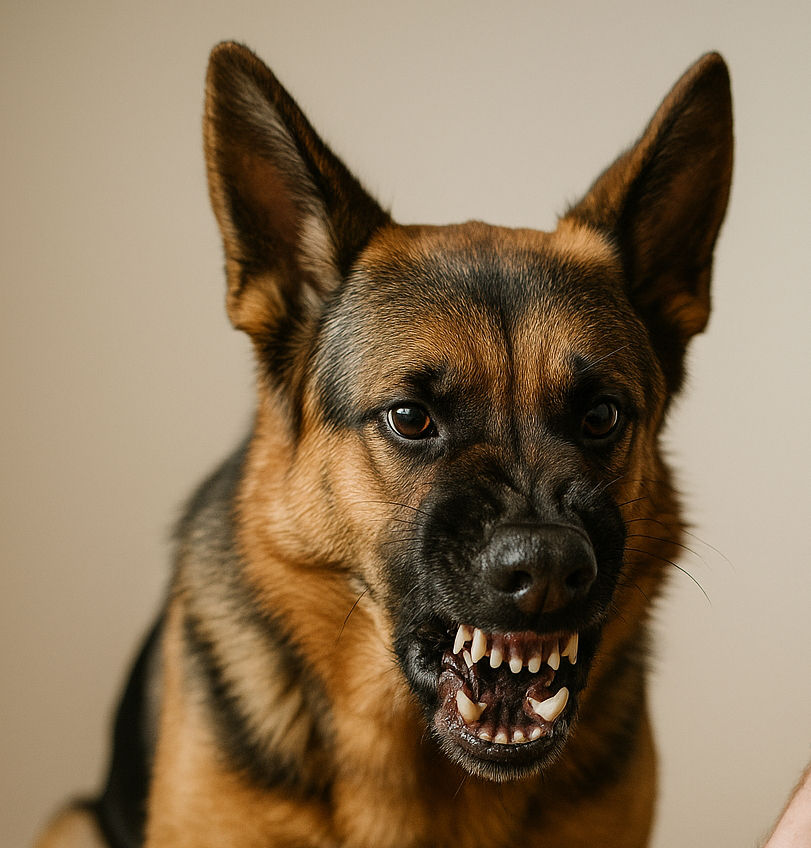
Fear responses (freezing, growling, snapping) are defensive survival behaviors, not intent to harm.

Aggression vs. Prey Drive
Chasing, grabbing, or intense focus is often genetically programmed prey behavior, especially in working breeds.
Aggression vs. Protective Instincts
Guarding behavior often appears when a dog feels responsible for the environment due to lack of leadership.
Aggression vs. Frustration or Overstimulation
Many dogs react explosively simply because their nervous system is overloaded.
Why Neutering Does NOT Fix Aggression
This is one of the most common misconceptions.
Neutering affects sexual hormones, not:
Fear processing
Stress thresholds
Confidence
Learned responses
Genetic temperament
Most aggression originates in neural pathways related to stress and survival, not testosterone.
The Real Causes Behind Aggressive Dog Behavior
Dog aggression develops through a combination of factors:
Genetics
Temperament, nerve strength, thresholds, and resilience are inherited traits.
Environment
Lack of structure, chaotic homes, or poor early exposure increase instability.
Developmental Stages
Improper experiences during critical puppy development periods leave lasting effects.
Leadership & Structure
When leadership is unclear, dogs step into roles they are not prepared to handle.
Why Many Training Approaches Fail
Aggression is often worsened because:
Owners respond emotionally instead of structurally
All aggression is treated the same
Dogs are flooded or suppressed instead of guided
Genetics are ignored
One-size-fits-all training does not work for behavior rooted in biology and development.
How Dog Aggression Should Be Addressed Correctly
Effective intervention focuses on:
Reducing stress load
Restoring leadership clarity
Controlled exposure below fear threshold
Building confidence through structure
Removing environmental responsibility from the dog
When the brain shifts from reactive (limbic) to thinking (cortical) mode, behavior changes.

Education Over Judgment
This article — and my work — is not about blaming dogs or owners.
It is about understanding behavior before reacting to it.
Many dogs labeled “aggressive” are actually asking for:
Guidance
Structure
Stability
Clear communication
Final Thoughts
Dog aggression is not a moral failure.
It is a biological and behavioral response that must be understood, not feared.
Balanced dogs are created through knowledge, structure, and correct guidance, not labels or shortcuts.


Comments