


Can Dogs Sense Bad People? The Truth Behind the “Bad Energy” Myth
After more than fifty years working with German Shepherds, Belgian Malinois, family dogs, working dogs, horses, police officers, trainers, and the public, I have learned one truth repeatedly:
Dogs notice things human beings miss.
They detect a shift in posture before we consciously recognize it. They hear tension in a voice. They smell physiological changes occurring inside the human body. They notice an unfamiliar gait, an object carried in the hand, a concealed face, a trembling movement, or a person approaching in a way they have never experienced before.
But can dogs sense bad people?
The honest answer is that dogs can detect an extraordinary amount of information about a person—but science has not shown that they can identify evil, moral corruption, criminal intent, or what people casually call “bad energy.”
A dog’s reaction is real. Our interpretation of that reaction may be completely wrong.
That distinction matters, because labeling someone as dangerous, dishonest, or evil merely because a dog barked at them is not science. It can also be unfair, discriminatory, and dangerous.

Can Dogs Sense Bad People or Evil?
Dogs do not understand human morality the way people do.
Concepts such as good, evil, honesty, guilt, cruelty, or criminal intent require complex moral and social judgments.
Dogs may learn that a particular person has behaved threateningly, unpredictably, or abusively.
They may remember a voice, scent, uniform, movement pattern, or location associated with a frightening experience.
That is learned association—not supernatural judgment.
Dogs may also respond to what is happening in the present moment:
A person moving directly toward them
A hard stare
Sudden or uncoordinated movement
A raised voice
Alcohol, medication, tobacco, perfume, or unfamiliar body odor
A hat, hood, helmet, cane, walker, wheelchair, or crutches
The person’s emotional arousal
Tension traveling through the leash
Their owner becoming nervous or defensive
A resemblance to someone from a previous negative experience
Territorial or protective arousal
Insufficient early exposure to different kinds of people
A dog can perceive something as unusual or threatening without that person presenting any real danger.
The dog is not lying. The dog is reacting to the information available to him—but that information does not include a verified record of the person’s moral character.
What Dogs Actually Sense in People
The mystery becomes easier to understand when we examine the sensory world in which dogs live.
Humans are primarily visual. Dogs gather information through an integrated system involving scent, sound, movement, body posture, memory, and context.
Dogs can smell emotional changes
Human emotion produces physiological changes. Fear and stress can alter perspiration, respiration, heart rate, hormones, and the volatile chemical compounds released through the body.
Research has demonstrated that dogs can detect and respond to odor samples collected from humans experiencing fear or happiness. In one study, dogs exposed to human fear odors displayed more stress-related behavior, sought more reassurance from their owners, and interacted less with unfamiliar people.
Another study found that dogs used their nostrils differently when investigating human odors collected during fearful situations, supporting the conclusion that human emotional odors carry biologically meaningful information for dogs.

This does not mean dogs smell evil.
It means they may smell physiological arousal associated with fear, stress, excitement, or tension.
Those emotions can occur in kind people, frightened children, veterinarians, people with anxiety disorders, individuals with medical conditions, and people who are simply nervous around dogs.
Fear has an odor. Evil has not been scientifically identified as one.
Dogs read facial expressions and voices
Dogs can extract emotional information from both human faces and human vocalizations.
In a controlled study published in Biology Letters, dogs were able to match emotional vocal sounds with corresponding facial expressions in both humans and other dogs.
This suggests that dogs do more than respond to a single isolated cue; they can integrate emotional information received through different senses.
A dog may therefore recognize that a voice sounds angry or that a facial expression appears tense. But recognizing anger is not the same as knowing why the person is angry, whether the anger is justified, or whether that individual is morally dangerous.
Dogs detect emotional states. They do not receive the entire human story behind them.
Dogs notice posture, direction, and movement
To a dog, movement carries meaning.
A direct approach, a body leaning forward, prolonged eye contact, hands reaching over the head, or a person walking rapidly into the dog’s space may create discomfort.
Dogs also notice movement that differs from what they learned to regard as familiar. Limping, swaying, dragging one foot, using crutches, moving a wheelchair, carrying an oxygen tank, or walking with a cane can become highly noticeable stimuli.
A properly prepared and socially experienced dog may observe these differences calmly. An inexperienced, genetically fearful, poorly socialized, or previously traumatized dog may bark, retreat, freeze, or lunge.
The reaction tells us something about the dog’s emotional state and developmental history. It tells us nothing reliable about the character of the person using the medical device.

Why Does My Dog Bark at Certain People?
Barking is communication, but it is not a moral verdict.
A dog may bark at a particular person because of fear, uncertainty, territorial arousal, frustration, excitement, surprise, learned behavior, or a combination of these factors.
According to the Merck Veterinary Manual, fear is the most common motivation for aggression in dogs. Fear-related aggression is often an attempt to make a perceived threat move farther away.
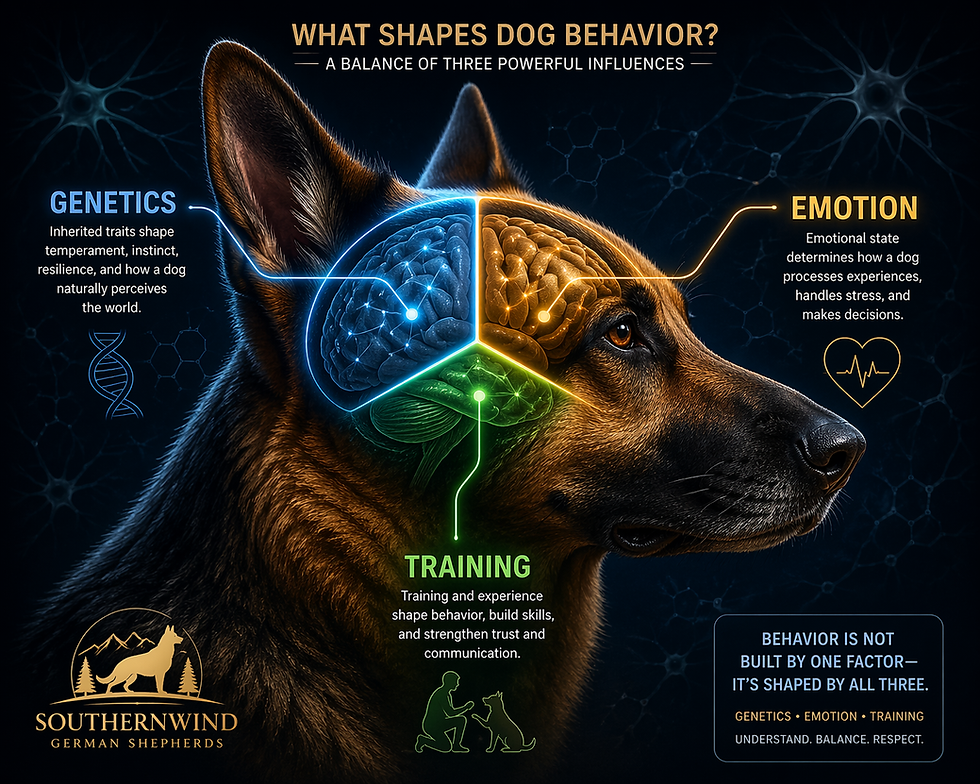
Genetics, inadequate socialization, early environmental influences, traumatic experiences, pain, and previous learning can all contribute to the behavior.
The dog barks. The person moves away. From the dog’s perspective, barking worked.
When this pattern is repeated, the dog may begin reacting earlier and more intensely. What began as uncertainty can become an established behavioral strategy.
That does not mean every barking dog is terrified, nor does it mean every reaction can be casually ignored.
A dog showing threatening behavior must be safely managed. But we must identify the motivation rather than invent a supernatural explanation.

Common reasons dogs react to specific people
Unfamiliar appearance
Hats, sunglasses, uniforms, large coats, beards, masks, helmets, umbrellas, and unusual silhouettes can change how a person appears.
Unfamiliar movement
Children running, elderly people walking slowly, people using mobility devices, or individuals with neurological or orthopedic conditions may move differently from the people the dog has previously encountered.
Scent differences
Medication, illness, another animal, occupational odors, smoke, alcohol, perfume, and stress-related perspiration may capture the dog’s attention.
Detecting a different scent does not tell the dog whether the person is good or bad. It only tells the dog that something is different.
Previous learning
A dog frightened by a man with a beard may later react to other bearded men. A dog startled by a delivery worker may become reactive to uniforms, packages, or the sound of a truck.
Dogs generalize. Their associations are not always accurate or fair.
Territorial behavior
Some dogs remain neutral toward strangers outdoors but bark when those same people enter the home, yard, vehicle, kennel, or another space the dog perceives as territory.
The owner’s emotional state
Dogs pay close attention to their handlers. Tightening the leash, holding the breath, changing posture, staring at an approaching person, or speaking nervously may signal that something important is happening.
This does not mean the owner alone “caused” the reaction. Genetics, learning, environment, and the dog’s current level of arousal still matter. But handler tension can become one additional piece of information.
Pain or medical changes
Pain can lower a dog’s tolerance and increase defensive behavior. Sudden or unexplained changes in behavior deserve veterinary evaluation, particularly when a dog begins reacting to familiar people or ordinary handling.
Dog Barking at a Disabled Person: Difference Is Not Danger
This point must be stated clearly.
A dog barking at a person with a disability is not detecting evil, corruption, or some dark energy surrounding that individual.
The dog may be reacting to:
Crutches moving rhythmically beside the body
The sound or motion of a wheelchair
An altered gait
A cane striking the floor
Braces, prosthetic devices, or medical equipment
Unfamiliar vocalization or breathing
Sudden, uneven, or involuntary movement
The dog’s lack of previous exposure
I have watched dogs become alert to people whose movement was simply unfamiliar. The correct response was never to praise the dog for identifying a “bad person.”
The correct response was to recognize uncertainty, control the situation, create distance, and teach the dog how to remain calm.
When people turn a dog’s fear or inexperience into a judgment against a disabled person, they are not honoring the dog’s intelligence. They are using the dog to reinforce their own assumption.
That is both scientifically wrong and deeply unfair.
But Haven’t Studies Shown That Dogs Judge People?
Some research suggests dogs can form preferences based on observed human behavior.
Dogs may distinguish between people who appear competent or incompetent at a task. Other experiments have explored whether dogs change their responses toward people who help or refuse to help their owners.

These findings are fascinating, but they should not be exaggerated.
Responding differently after watching a specific social interaction is not equivalent to detecting an unknown person’s hidden morality. The dog has observed behavior in a defined situation and may form an association from it.
That is social learning or evaluation—not mystical character detection.
A dog may learn that one person produces positive outcomes and another predicts discomfort.
Dogs are excellent observers of consequences. But no controlled study has established that a dog can meet an unfamiliar human and accurately determine whether that individual is fundamentally good, evil, honest, or criminal.
Why the “Dogs Always Know” Belief Can Become Dangerous
The phrase sounds harmless:
“My dog didn’t like him, so I knew something was wrong.”
Sometimes the person later behaves badly, and the dog’s original reaction feels prophetic.
But people tend to remember the apparent successes and forget every occasion when the dog barked at a harmless visitor, veterinarian, delivery driver, frightened child, or person wearing an unfamiliar object.
This is a form of confirmation bias. We notice the events that support our belief and overlook the events that contradict it.
The myth creates several real problems:
Fear and reactivity may go untreated.
Owners may reward threatening behavior.
Innocent people may be judged unfairly.
Disabled or medically different people may be stigmatized.
Children and visitors may be placed in unsafe situations.
Owners may disregard escalating aggression because they believe the dog “has a reason.”
A dog’s welfare may deteriorate while the real fear or anxiety remains unaddressed.
You should never force a dog to interact with someone who makes the dog uncomfortable. But protecting the dog’s space is different from accusing that person of being evil.
Safety does not require superstition.
The Southernwind Read Before You Judge Framework™
When a dog reacts strongly to a person, I recommend slowing down and evaluating five areas before inventing a story about “bad energy.”
1. Read the dog
Observe the entire body—not only the bark.
Look for:
Stiffening
Weight shifting backward or forward
Closed mouth
Lip licking
Yawning
Turning the head away
Lowered posture
Tucked tail
Hard staring
Raised hackles
Trembling
Repeated retreat and reapproach
Inability to respond to familiar cues
A wagging tail alone does not prove friendliness, and barking alone does not reveal motivation.
2. Read the person’s presentation
What is actually different?
Consider clothing, scent, posture, eye contact, speed, direction, equipment, tone of voice, and movement. Do not confuse “unfamiliar” with “dangerous.”
3. Read the environment
Is the dog trapped by a leash, doorway, fence, narrow hallway, car, kennel, or corner? Is this happening inside the dog’s territory? Are other dogs barking? Is the environment already increasing arousal?
Behavior never occurs outside of context.
4. Read the dog’s history
Was that exposure gradual and positive—or overwhelming and uncontrolled?
Also consider genetics, age, previous trauma, reinforcement history, pain, and health.
5. Respond without inventing morality
Create distance. Prevent forced contact. Reward calm observation when it is safe to do so. Use barriers or a properly conditioned basket muzzle when risk requires it.
Seek qualified professional help if the behavior includes lunging, snapping, biting, or escalating aggression.
Describe what you can observe:
“My dog became stiff and barked when the person approached with crutches.”
Do not transform it into something you cannot prove:
“My dog sensed that the person was evil.”
The first statement gives us information we can use. The second closes the door to understanding.
What Owners Should Do When a Dog Reacts to Someone
Do not force a greeting to prove that the person is safe. A frightened dog pushed beyond his threshold may escalate.
Instead:
Increase distance calmly.
Avoid tightening the leash unnecessarily or shouting at the dog.
Ask the person not to stare, reach, lean over, or attempt to pet the dog.
Prevent access if there is any risk of biting.
Observe and document the precise trigger.
Arrange controlled desensitization and counterconditioning when appropriate.
Request a veterinary examination for sudden behavioral changes.
Consult a board-certified veterinary behaviorist or appropriately qualified behavior professional for serious or persistent reactions.
The goal is not to make every dog love every person. The goal is for the dog to remain safe, emotionally regulated, and under reliable control.
Can We Respect Dogs Without Making Them Magical?
Absolutely.
Dogs do not become less extraordinary when we explain their abilities through biology.
Their noses can detect chemical information we cannot perceive.
Their hearing captures changes we miss. Their survival depends upon noticing movement, posture, tension, and patterns.
Through domestication and life beside human beings, dogs have become remarkably attentive to our emotional and social signals.
That reality is powerful enough. We do not need to add supernatural claims.
A dog may notice that a person is tense before we do. A dog may recognize threatening posture. A dog may remember that a certain individual previously caused pain. A dog may detect fear, illness-related changes, or unfamiliar scent.
Those abilities deserve respect.
But a reaction is still not a trial, a bark is not a conviction, and a dog is not a judge of the human soul.
The Final Truth: What Is Your Dog Really Telling You?
When people ask me, “Can dogs sense bad people?” my answer is direct:
Dogs can sense information. People assign the moral meaning.
Your dog may be telling you:
“This movement is unfamiliar.”
“This person smells different.”
“I feel trapped.”
“My owner has become tense.”
“I remember something similar.”
“Someone is entering my territory.”
“I am overstimulated.”
“I am afraid.”
“I do not yet know how to handle this.”
Listen to that message.
Protect your dog. Protect the person. Study the circumstances. Respect what the dog is feeling—but do not turn uncertainty, fear, or inexperience into a supernatural accusation.
Dogs are extraordinary animals. They do not need mythology to make them magnificent.
Frequently Asked Questions
Can dogs sense bad people?
Dogs can detect human scent, emotional arousal, movement, posture, vocal tone, and behavioral patterns. However, there is no scientific evidence that dogs can identify whether an unfamiliar person is morally bad or evil. A reaction should be interpreted through behavior, learning history, health, and context.
Can dogs sense evil?
Science has not demonstrated that dogs can sense evil as a moral or supernatural quality. Dogs may react to anger, fear, tension, unusual behavior, unfamiliar movement, or previous associations, but these cues are not proof of evil intent.
Why does my dog bark at certain people but not others?
Differences in scent, gait, clothing, eye contact, voice, movement, gender presentation, facial hair, medical equipment, and previous learning can all affect a dog’s response. Territory, fear, frustration, pain, and owner tension may also contribute.
Does my dog’s reaction mean I should distrust someone?
No. Take the dog’s discomfort seriously for safety purposes, but do not treat it as proof about the person’s character. Create distance, observe the specific triggers, and assess the dog’s behavior in context.
Why does my dog bark at people using canes, wheelchairs, or crutches?
The equipment’s appearance, sound, and movement may be unfamiliar. The person may also move differently from people the dog has encountered before. The reaction usually indicates insufficient familiarity, fear, surprise, or arousal—not a judgment of the person.
Can dogs smell fear?
Research indicates that dogs can detect odor-associated information produced during human emotional states, including fear. Dogs exposed to human fear odors have shown changes in stress, social behavior, and attention. Smelling fear is not the same as identifying a dangerous or immoral person.
Can dogs tell when someone is angry?
Dogs can process information from human facial expressions, voices, posture, and odor. They may recognize cues associated with anger or emotional arousal, but they do not necessarily understand the cause, target, or moral meaning of that emotion.
Should I punish my dog for barking at strangers?
Punishment can increase fear, anxiety, arousal, and the risk of aggression. Safely interrupt access, create distance, and identify the trigger. Persistent or dangerous behavior should be evaluated by a veterinarian and a qualified behavior professional.
Should I let my dog approach the person to investigate?
Not automatically. If the dog is stiff, intensely staring, growling, lunging, retreating repeatedly, or unable to settle, forced interaction can increase risk. Allow space and use controlled behavior work instead of pressuring the dog to greet.
Author Biography
Maria Cecilia Martinez is the founder of Southernwind Kennels LLC and The Southernwind Canine Knowledge Library™. She has worked with German Shepherds, Belgian Malinois, horses, working dogs, breeding programs, and canine development for more than fifty years. Her experience includes over two decades working with the Puerto Rico Mounted Police, as well as serving as an AKC and FCI dog judge and FCI temperament judge. Her work combines generational hands-on experience with modern research in genetics, behavior, temperament, early development, and responsible breeding.
Scientific and Veterinary References
Albuquerque, N., et al. (2016). “Dogs recognize dog and human emotions.” Biology Letters, 12(1). The study found that dogs could integrate emotional information from facial images and vocalizations. Royal Society Publishing
D’Aniello, B., et al. (2018). “Interspecies transmission of emotional information via chemosignals: from humans to dogs.” Animal Cognition, 21, 67–78. PubMed record
Siniscalchi, M., et al. (2016). “The dog nose ‘KNOWS’ fear: asymmetric nostril use during sniffing at canine and human emotional stimuli.” Behavioural Brain Research, 304, 34–41. PubMed record
D’Aniello, B., et al. (2023). “When are puppies receptive to emotion-induced human chemosignals?” This research examined how puppies and adult dogs respond to human fear-related odor information. PubMed record
Chijiiwa, H., et al. (2022). “Female dogs evaluate levels of competence in humans.” Behavioural Processes, 204. This study concerned dogs’ responses to observed human competence—not detection of moral character. PubMed record
Merck Veterinary Manual. “Behavior Problems of Dogs.” Reviews fear-related, territorial, learned, and medically influenced aggression and emphasizes that fear is the most common motivation for canine aggression. Merck Veterinary Manual
Merck Veterinary Manual. “Social Behavior of Dogs.” Reviews canine communication through posture, expression, vocalization, scent, and touch. Merck Veterinary Manual
American Veterinary Society of Animal Behavior. “Scaredy Dogs and Strangers.” Explains how fear or discomfort frequently underlies barking, growling, lunging, and other aggressive behavior toward visitors. AVSAB
American Veterinary Society of Animal Behavior. “Socialization Is More Than Mere Exposure.” Discusses graded, positive exposure to people, movement, equipment, and environments while observing the individual dog’s emotional response. AVSAB

Comments