


Types of Dog Intelligence: Why Not Every Dog Is Smart the Same Way
By Maria Cecilia Martinez
Founder of Southernwind Kennels LLC
German Shepherd breeder, trainer, judge, and canine development educator since 1974
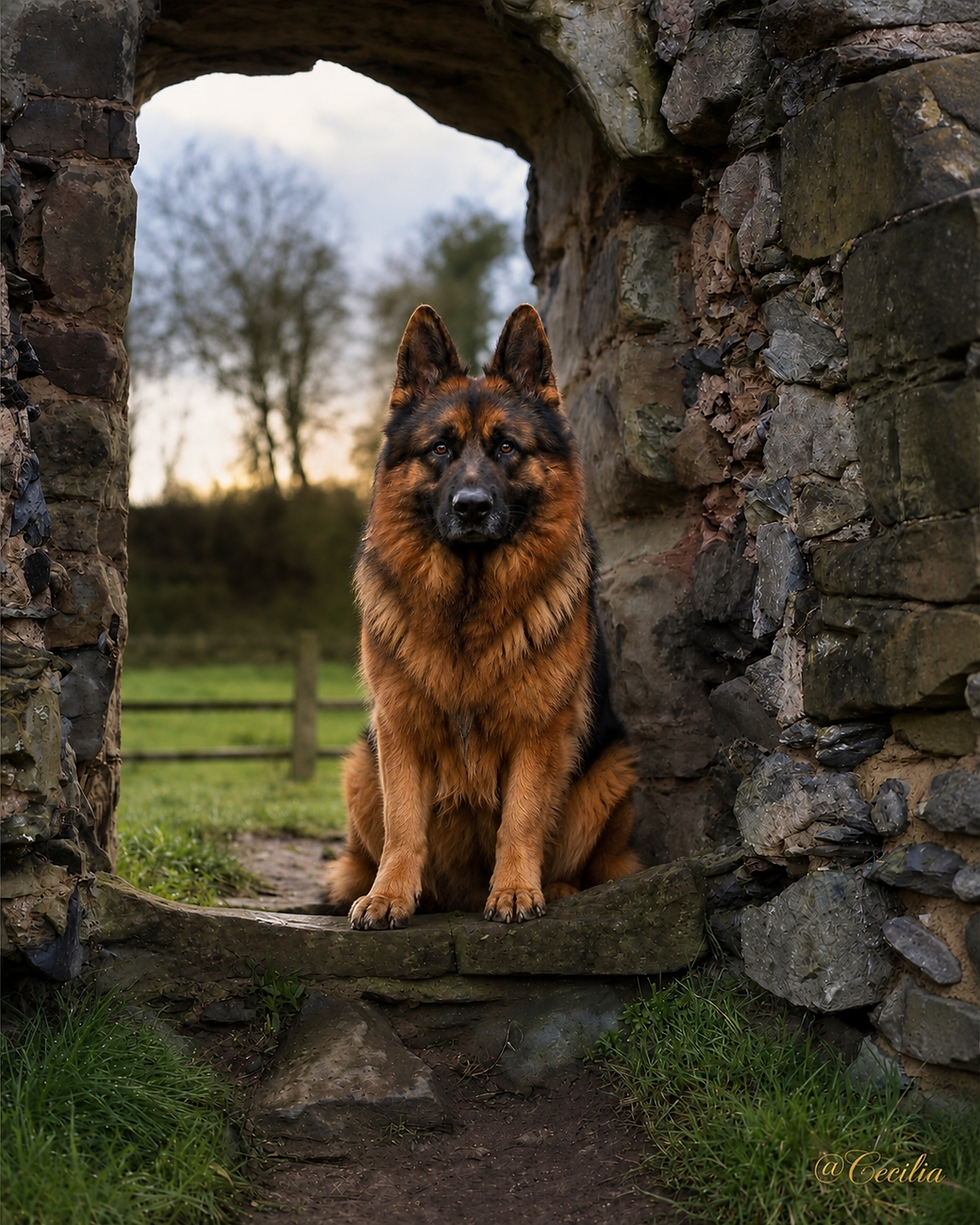
Types of Dog Intelligence: Why Not Every Dog Is Smart the Same Way
There is one mistake people make when they talk about intelligent dogs.
They speak as if intelligence is one single thing.
They ask, “Is this dog smart?
” They say, “That dog learns fast.” They compare one breed to another, one puppy to another, one dog to another.
But after more than fifty years raising, training, studying, judging, and living with German Shepherds, I can tell you something very clearly:
A dog is not intelligent in only one way.
Some dogs are brilliant at reading people. Some are powerful problem solvers. Some are born workers. Some have deep emotional awareness. Some have strong instinctive intelligence. Some have tremendous memory. Some are quick to obey, while others are intelligent enough to question before they act.
That does not make one dog smart and another dog stupid.
It means their intelligence is working through different channels.
Science now supports what experienced breeders, trainers, and handlers have known for generations: canine intelligence is not one flat measurement.
Dogs differ in social cognition, inhibitory control, communication, memory, problem-solving, emotional recognition, trainability, and instinctive behavior.
And this matters deeply.
Because when people misunderstand the kind of intelligence a dog has, they often misunderstand the dog himself.

The First Truth: Intelligence Is Not the Same as Obedience
Many people confuse obedience with intelligence.
A dog who sits quickly is called smart.
A dog who hesitates is called stubborn.
A dog who watches before acting is called difficult.
A dog who invents his own solution is called hard-headed.
But obedience is only one expression of intelligence.
A dog may be very trainable and responsive to direction. That is one type of intelligence. But another dog may be more independent, more environmental, more investigative, or more emotionally perceptive.
That dog may not repeat commands like a machine, but he may understand situations with depth.
This is especially important with German Shepherds.
A good German Shepherd is not supposed to be an empty robot.
He is supposed to think. He is supposed to evaluate. He is supposed to observe his environment, read his handler, recognize pressure, respond to guidance, and remain mentally present.
That requires more than obedience.
That requires a complete mind.
What Science Tells Us About Dog Intelligence
Scientific research in canine cognition has shown that dogs can be studied across different mental abilities, including:
memory
social communication
understanding human gestures
inhibitory control
emotional recognition
trainability
physical reasoning
breed-related behavioral tendencies
individual cognitive differences
One important study by Rosalind Arden and Mark Adams found evidence for a general intelligence factor in dogs, using tasks such as detour problem-solving, pointing-following, and quantity discrimination.
Other studies show that cognitive traits such as communication and inhibitory control may vary across breeds and individuals. Research has also shown that dogs are capable of reading human gestures, recognizing emotional information, and in rare cases, learning many object names.
But science also teaches us something very important:
Breed matters, but breed is not the whole dog.
Genetics create tendencies. Early development shapes expression. Training builds clarity. Environment teaches the dog what matters. The owner either strengthens intelligence or confuses it.
This is where responsible breeding and responsible raising become inseparable.

The Main Types of Dog Intelligence
1. Instinctive Intelligence
Instinctive intelligence is the intelligence a dog carries from generations of selection.
This is the intelligence connected to what a dog was bred to do.
A herding dog may naturally notice movement, pressure, direction, and space.
A retriever may naturally orient toward carrying and returning objects
A scent hound may live through the nose with incredible persistence.
A guardian breed may naturally evaluate territory and unfamiliar presence.
A German Shepherd may carry a combination of herding awareness, handler connection, protection instinct, environmental sensitivity, and working drive.
This intelligence is not taught from zero.
It is inherited potential.
A breeder does not create instinct out of nothing. A breeder selects, preserves, balances, and refines it.
At Southernwind, this is one of the reasons we never look at a dog only by beauty, color, coat, or pedigree names.
We look at what is behind the dog. We look at the nervous system, the temperament, the drives, the structure, the balance, and the purpose behind the blood.
Because instinct without balance can become chaos.
A dog with strong instinct but weak nerves may react too fast. A dog with drive but no self-control may become frantic. A dog with protection instinct but poor judgment may become unsafe.
A dog with herding instinct but no guidance may chase everything that moves.
Instinctive intelligence is powerful, but it must be anchored.

2. Adaptive Intelligence
Adaptive intelligence is the dog’s ability to figure things out.
This is the dog who watches the gate latch.
The puppy who studies how to climb out of the play area.
The adult dog who learns the household routine without being formally taught.
The dog who understands that different people in the house behave differently.
Adaptive intelligence is not always convenient.
Very intelligent dogs can become problem creators when their minds are not given direction.
A dog who can solve a puzzle can also solve how to open the trash can, steal food, escape a crate, or manipulate a soft owner.
This is why people sometimes say, “My dog is too smart.”
The truth is not that the dog is too smart. The truth is that his intelligence has no proper job.
A German Shepherd with strong adaptive intelligence needs structure, clarity, mental work, and consistent boundaries. Not harshness. Not chaos. Not endless freedom without guidance.
He needs a life where his brain has a purpose.
3. Working and Trainability Intelligence
Working intelligence is the ability to learn from human direction and perform tasks reliably.
This includes:
attention to the handler
response to commands
ability to repeat learned behaviors
willingness to work
tolerance for correction
focus under distraction
desire to cooperate
This is the type of intelligence most people recognize first because it is visible.
The dog sits.
The dog heels.
The dog recalls.
The dog performs.
But even here, we must be careful.
A fast learner is not always a stable dog.
A flashy worker is not always a clear-minded dog.
A dog who performs beautifully in one environment may fall apart in another.
True working intelligence is not only speed.
It is clarity under pressure.
For a German Shepherd, working intelligence must be joined with temperament.
A dog can learn quickly and still be nervous.
A dog can perform commands and still lack emotional balance.
A dog can be intense and still lack judgment.
This is why serious breeding cannot be reduced to “smart parents produce smart puppies.”
The question is deeper:
What kind of intelligence is being produced?
Can the dog think under pressure?
Can the dog recover?
Can the dog read the handler?
Can the dog settle after stimulation?
Can the dog use his intelligence without becoming unstable?
That is where true selection begins.

4. Social Intelligence
Social intelligence is the dog’s ability to read people and other dogs.
This is one of the most remarkable areas of canine cognition.
Dogs are unusually skilled at understanding human gestures, attention, body posture, pointing, gaze, and emotional tone. This is one reason dogs became such extraordinary partners to humans.
A socially intelligent dog notices details.
He sees when a person is unsure.
He reads when a child is excited. He understands when his handler is tense. He knows when another dog is uncomfortable. He may adjust his body, soften his approach, avoid conflict, or seek contact.
This kind of intelligence is often quiet.
It does not always look dramatic. It may appear as patience, awareness, softness, timing, or restraint.
In puppies, social intelligence can be seen very early. Some puppies are naturally people-oriented.
Some observe faces. Some seek interaction. Some are more independent. Some are bold with the environment but less interested in human contact.
None of these observations should be judged too quickly.
They are pieces of the puppy’s profile.
A good breeder watches these details because puppy placement is not just about color, size, or gender. It is about matching the mind of the puppy with the reality of the home.
5. Emotional Intelligence
Emotional intelligence in dogs does not mean dogs think exactly like humans.
That is where people go wrong.
Dogs are not little people in fur coats. They do not process every feeling the way humans do. But dogs are deeply sensitive to emotional information.
Research has shown that dogs can recognize emotional signals from both humans and other dogs. They can respond to tone of voice, facial expression, body tension, crying, stress, and emotional atmosphere.
Any person who has lived deeply with dogs knows this.
There are dogs that feel the room before anyone speaks. Dogs that know when something is wrong. Dogs that come closer when a person is sad. Dogs that become worried when the home is tense. Dogs that absorb the nervous system of the people around them.
But emotional sensitivity is not automatically emotional stability.
That is a very important difference.
A dog may be emotionally intelligent but easily overwhelmed.
Another dog may be less emotionally reactive but more stable. The ideal is not a dog who feels everything and collapses. The ideal is a dog who can perceive emotion and remain balanced.
For a family German Shepherd, this matters enormously.
A dog living with children, visitors, noise, movement, and human emotion must have enough emotional intelligence to read the home, but enough nerve strength not to be consumed by it.
That is temperament.
6. Executive Function and Self-Control
Executive function is the dog’s ability to control impulses.
This includes:
waiting
inhibiting chasing
thinking before reacting
staying focused
recovering after excitement
resisting distraction
choosing the handler instead of the impulse
In simple words, self-control is the brake system of the brain.
Many high-drive dogs have powerful engines. But if the brakes are weak, the dog becomes difficult for the average owner.
This is where people misunderstand working breeds.
A German Shepherd may be brilliant, intense, responsive, and full of drive. But if that dog is not taught self-control, his intelligence may become noise.
He may bark too much. He may chase movement. He may mouth or grab. He may react before thinking .
He may struggle to settle. He may become overstimulated in public.
That does not mean the dog is bad. It means his brain needs development.
Impulse control is not created by yelling.
It is built through patient structure, repetition, maturity, proper exposure, fair boundaries, and emotional regulation.
A young dog does not become wise because we demand it.
He becomes wise because we raise him toward wisdom.
7. Communication Intelligence
Communication intelligence is the dog’s ability to understand signals and send signals back.
This includes:
reading pointing gestures
following gaze
responding to tone
understanding routines
offering behaviors
using eye contact
using body language to communicate needs
learning words or object names
Some dogs are exceptional communicators.
They seem to understand what is being asked before the full command is given.
They observe patterns. They connect words with actions. They anticipate routines. They know which shoes mean a walk and which keys mean you are leaving.
Some rare dogs show exceptional word-learning ability. Studies of dogs such as Rico, the famous Border Collie, demonstrated that some dogs can learn many object names and infer the meaning of a new word by exclusion.
But this does not mean every dog should be judged by vocabulary.
A dog may not know the name of one hundred toys and still be highly intelligent in scent work, protection work, environmental awareness, emotional sensitivity, or problem-solving.
That is the whole point.
Dogs do not all shine through the same window.
8. Environmental and Situational Intelligence
This is the intelligence many old-time dog people recognize immediately.
It is the dog who understands the environment.
He knows when something is different.
He notices a gate left open. He detects a strange sound. He reads the movement of animals. He understands the rhythm of the property. He knows when visitors belong and when something feels wrong.
This intelligence is not always measured easily in a laboratory.
But in real life, it matters.
On a ranch, in a kennel, around horses, around children, around working people, around other dogs, this type of intelligence can be invaluable.
A truly useful dog is not only one who performs tricks .A truly useful dog understands context.
This is one reason I respect the old working mind of the German Shepherd so deeply.
The breed was not created to be decoration. It was created to observe, think, move, guard, guide, work, and remain connected to the human.
That is a much deeper intelligence than simply looking pretty in a photograph.
Why Not Every Dog Has the Same Intelligence
Dogs differ because several forces shape the mind:
Genetics
Genetics influence instinct, temperament, drive, sensitivity, energy, communication tendencies, and behavioral predispositions.
Breed Purpose
Dogs selected for herding, guarding, retrieving, hunting, scenting, or companionship often carry different natural tendencies.
Individual Variation
Even within the same breed and the same litter, puppies are not identical. One may be more people-focused. Another may be more environmental. One may be bold. Another may be thoughtful. One may be quick to recover. Another may need more time.
Early Development
The first weeks matter. Puppies learn through touch, sound, movement, surfaces, litter interaction, human contact, stress recovery, novelty, and the rhythm of the breeder’s environment.
Training and Handling
A dog’s intelligence can be developed or damaged. Confusing handling can create insecurity. Fair structure can create confidence.
Emotional Environment
Dogs live inside the nervous system of the home. A chaotic household can make a sensitive dog anxious. A balanced household can help a thoughtful dog blossom.
This is why responsible ownership matters as much as responsible breeding.
The Southernwind View: Intelligence Must Be Matched, Not Flattered
At Southernwind, I do not look at intelligence as a beauty contest.
I look at intelligence as part of the whole dog.
A puppy may be brilliant, but brilliant for whom?
A very high-drive, highly adaptive, environmentally intense puppy may be excellent for an experienced working home but too much for a soft first-time family.
A deeply social, emotionally connected puppy may be perfect for a family looking for a companion but may not be the right dog for a demanding sport home.
A puppy with strong independence may need an owner who respects thinking and does not confuse it with disobedience.
A puppy with high sensitivity may need stability, not chaos.
This is why puppy matching matters.
People often choose with their eyes. A breeder must choose with experience.
The right match is not always the puppy the buyer first points to.
The right match is the puppy whose mind, temperament, drive, and emotional structure fit the life waiting for him.
That is responsible breeding.
How Owners Can Recognize Their Dog’s Intelligence
Instead of asking, “Is my dog smart?” ask better questions.
What does my dog notice first?
People? Movement? Food? Sound? Objects? Other dogs? The environment?
How does my dog solve problems?
Does he try again? Does he ask for help? Does he get frustrated? Does he observe first?
How does my dog respond to pressure?
Does he recover? Avoid? push forward? become frantic? shut down?
How does my dog learn best?
Through food? play? praise? movement? repetition? calm structure?
Is my dog socially aware?
Does he read people? Does he adjust to children? Does he understand other dogs’ signals?
Does my dog have self-control?
Can he wait? Can he settle? Can he stop himself? Can he think when excited?
These questions tell you far more than simply saying, “My dog is smart.”
They help you understand how your dog’s mind works.
And when you understand the mind, training becomes more fair.
Intelligence Without Balance Can Become a Problem
This is where I will be very direct.
A smart dog in the wrong hands can become a disaster.
Not because the dog is bad.
Because intelligence without leadership becomes self-employment.
A clever dog will find something to do.
A high-drive dog will create activity.
A sensitive dog will absorb tension.
A strong dog will test boundaries.
An insecure dog will make decisions from fear.
An unstructured dog will develop habits that humans later call behavior problems.
This is why German Shepherds should never be sold or placed as if they are ordinary decoration.
They are powerful minds in powerful bodies.
They need owners who are willing to learn, guide, protect, and raise them with respect.
The question is not only whether the dog is intelligent.
The question is whether the human is prepared to live with that intelligence.
Final Thought
A dog is not intelligent because he acts like another dog.
He is intelligent when his mind works clearly in the way nature, genetics, development, and experience shaped him to work.
Some dogs think with their nose. Some with their eyes. Some with their body. Some with their emotions. Some through work. Some through observation. Some through connection. Some through instinct.
The true breeder sees the difference.
The true trainer respects the difference.
The true owner learns the difference.
And the dog becomes understood.
That is when intelligence becomes partnership.
Not every dog is smart in the same direction. The art is not forcing every dog to think alike. The art is learning how that dog’s mind was built to work.
Frequently Asked Questions About Dog Intelligence
Are there really different types of intelligence in dogs?
Yes. Dogs can show different strengths in problem-solving, trainability, social communication, emotional awareness, memory, instinctive behavior, and self-control. One dog may be highly obedient, while another may be better at reading people, solving environmental problems, or using instinct.
Does breed affect dog intelligence?
Breed can influence certain tendencies because dogs were historically selected for different working purposes. However, breed does not predict everything about an individual dog. Genetics, early development, training, environment, and individual temperament all matter.
Are German Shepherds intelligent dogs?
Yes, German Shepherds are highly intelligent, but their intelligence is not only obedience. A good German Shepherd should show handler connection, environmental awareness, problem-solving ability, trainability, emotional perception, and judgment. Without structure, that same intelligence can become difficult for inexperienced owners.
Why does my smart dog sometimes seem stubborn?
Many dogs called stubborn are actually thinking, confused, overstimulated, under-motivated, or working from a different type of intelligence. Some dogs obey quickly. Others observe first. Good training helps the owner understand how the dog learns instead of labeling the dog unfairly.
Is emotional sensitivity a form of intelligence in dogs?
Yes, emotional sensitivity can be part of social and emotional intelligence. Dogs can recognize emotional cues from humans and other dogs. However, emotional sensitivity must be balanced with stable nerves. A dog who feels everything but cannot recover may become anxious.
Can training improve a dog’s intelligence?
Training does not change the dog’s genetics, but it can develop the dog’s abilities. Proper training improves communication, impulse control, problem-solving, confidence, and emotional regulation. Poor training can confuse or suppress intelligence.
Are puppies already showing intelligence before they go home?
Yes. Puppies show early differences in social interest, recovery, curiosity, confidence, sound sensitivity, environmental awareness, and problem-solving. A breeder who observes puppies carefully can often see patterns long before the puppy leaves for a new home.
At Southernwind Kennels, we do not raise German Shepherds by looking only at beauty, color, or pedigree names.
We study the whole dog.
Temperament.
Nerves.
Instinct.
Structure.
Development.
Intelligence.
Emotional balance.
The ability to live with humans and still remain true to the purpose of the breed.
A German Shepherd is not just a smart dog.
He is a thinking dog.
And thinking dogs deserve owners who are willing to understand them.
For families interested in learning more about Southernwind German Shepherds, our breeding philosophy, and how we match puppies to the right homes, visit Southernwind Kennels and continue exploring our educational articles on puppy development, temperament, training, and responsible ownership.
About the Author
Maria Cecilia Martinez is the founder of Southernwind Kennels LLC and has dedicated more than 50 years to the German Shepherd breed. Since 1974, she has bred, raised, trained, evaluated, and educated families about German Shepherds, with lifelong experience in canine development, temperament, structure, working ability, and responsible breeding.
Her background includes decades of hands-on work with dogs and horses, service with the Mounted Police in Puerto Rico, seminar education, puppy development programs, and experience as an AKC and FCI judge and temperament evaluator. Her work through Southernwind Kennels focuses on preserving the German Shepherd as a balanced, intelligent, stable, family and working companion.
Scientific References
Arden, R., & Adams, M. J. (2016). A general intelligence factor in dogs. Intelligence, 55, 79–85.
Hare, B., Brown, M., Williamson, C., & Tomasello, M. (2002). The domestication of social cognition in dogs. Science.
Gnanadesikan, G. E., Hare, B., Snyder-Mackler, N., & MacLean, E. L. (2020). Estimating the heritability of cognitive traits across dog breeds reveals highly heritable inhibitory control and communication factors. Animal Cognition.
MacLean, E. L., Snyder-Mackler, N., vonHoldt, B. M., & Serpell, J. A. (2019). Highly heritable and functionally relevant breed differences in dog behaviour. Proceedings of the Royal Society B.
Junttila, S., Valros, A., Mäki, K., Väätäjä, H., Reunanen, E., & Tiira, K. (2022). Breed differences in social cognition, inhibitory control, and spatial problem-solving ability in the domestic dog. Scientific Reports.
Albuquerque, N., Guo, K., Wilkinson, A., Savalli, C., Otta, E., & Mills, D. (2016). Dogs recognize dog and human emotions. Biology Letters.
Custance, D., & Mayer, J. (2012). Empathic-like responding by domestic dogs to distress in humans: An exploratory study. Animal Cognition.
Kaminski, J., Call, J., & Fischer, J. (2004). Word learning in a domestic dog: Evidence for fast mapping. Science.
Morrill, K., et al. (2022). Ancestry-inclusive dog genomics challenges popular breed stereotypes. Science.
University of Pennsylvania. Canine Behavioral Assessment and Research Questionnaire, C-BARQ.
SEO Title
Types of Dog Intelligence: Why Dogs Are Smart in Different Ways
Meta Description
Science shows dogs do not all think the same. Learn the major types of dog intelligence, from instinct and trainability to emotion, problem-solving, and self-control.
Suggested URL Slug
/types-of-dog-intelligence
Focus Keyword
types of dog intelligence
Secondary Keywords
dog intelligence, canine intelligence, canine cognition, smart dogs, German Shepherd intelligence, dog emotional intelligence, dog problem solving, dog trainability, social intelligence in dogs, canine behavior science
Suggested Wix Category
Dog Behavior and Puppy Development
Suggested Tags
dog intelligence, canine intelligence, canine cognition, German Shepherd intelligence, dog behavior science, dog emotional intelligence, dog trainability, dog problem solving, Southernwind Kennels, puppy development, canine temperament


Comments