


How Prison Dog Training Programs Change Lives: What I Witnessed Inside a Women’s Prison in Puerto Rico
The first time I walked through the gates of a women’s prison in Puerto Rico, I remember asking myself, How is this going to work? How are these women going to receive me?
I had already spent much of my life around powerful German Shepherds, horses, police officers, trainers, and people in difficult circumstances. I had worked with men in an addiction-recovery program at Hogar Eliezer. I was not a woman who frightened easily.
But this was different.
This was a prison.
The gates closed behind me. Correctional officers surrounded the area. I was entering a world with its own rules, pressures, and emotional language. I knew dogs. I knew training. I knew how to organize a program. But I did not yet know these women, and they did not know me.
I wondered what they would think when they saw me. Would they accept my way of teaching? Would they want the responsibility we were about to place in their hands? Would this become a real program—or an idea that sounded good outside the walls and failed once we were locked inside them?
Then I met the women.
They were not suspicious. They were not distant.
They were excited.
They asked question after question. They wanted to know about the dogs, what they would be teaching, how they would care for them, and what was expected of them. They did not stand back waiting to be persuaded. They stepped toward the program and became part of it.
Perhaps my way of communicating helped. Perhaps it was my body language. I did not enter looking at them as cases, crimes, or women whose past I needed to investigate. I entered as a dog woman with work to do, and I spoke to them as women capable of learning that work.
Their reaction brought me comfort.
I had gone inside wondering whether I would be able to reach them. Instead, they met me halfway from the beginning.
And the dogs gave all of us an immediate language.
That is where my understanding of prison dog training programs began—not in a research paper and not in a sentimental promise that dogs magically save people, but in a prison yard where a group of excited women, a team of shelter dogs, and one uncertain trainer began working together.
How This Prison Dog Training Program Began

The program took place at the women’s correctional institution in Vega Alta, identified in Puerto Rico government records as the Escuela Industrial para Mujeres de Vega Alta. The women’s correctional population was relocated to Bayamón years later.
Pedro Toledo Dávila, who was Superintendent of the Puerto Rico Police, invited and authorized me to help establish the program. By then, I had worked for years with the Puerto Rico Mounted Police and had extensive experience training and evaluating dogs. Still, this would be a new experience for me.
We began with approximately twelve women and shelter dogs chosen for their suitability for the work. Breed was not what mattered. Temperament mattered. We needed dogs that could live safely within the structure, respond to humane training, and eventually become stable companions for adoptive families.

Each session lasted three months. We provided formal training three times a week, but the women’s responsibility did not end when we trainers walked out through the gates.
Every day, they had to:
Feed the dogs and provide clean water
Clean and maintain the kennels
Groom the dogs and observe their physical condition
Practice the lessons between our visits
Learn leash handling and basic obedience
Prepare each dog for life with an adoptive family
When a dog completed the program, that dog was adopted.
This was not an occasional visit in which someone brought in a friendly animal for an hour of comfort.
The women were responsible for living beings whose health, behavior, and futures depended on what they did after the excitement of the first day had passed.
That distinction is important.
A person can appear interested in one class. A dog cannot be cared for only when someone feels inspired.
The water bowl must still be filled. The kennel must still be cleaned. The coat must still be brushed. The lesson must still be practiced. Tomorrow, it must happen again.
That was where the real program lived.
They Did Not Need to Tell Me Their Past
The dogs did not know why any woman was inside that institution.
They did not know her sentence, her family history, her mistakes, her losses, or the events that had brought her behind those gates.
A dog cannot read a court record. He only knows the person standing before him now.
Is her hand patient?
Is her voice clear?
Does she bring the food on time?
Does she become angry when he does not understand, or does she breathe, adjust, and try again?
Does she return tomorrow?
That did not mean the dogs offered magical or unconditional rehabilitation. Dogs are not moral judges, but neither are they blind to human behavior. They respond to tension, timing, inconsistency, gentleness, frustration, clarity, and care.
As I have explained in my article about the myth that dogs can sense “bad people”, dogs read what is happening in front of them—not an invisible record of a person’s soul.
That honesty made the relationship valuable.
The women did not have to persuade a dog that they deserved another chance. They had to show the dog, through their actions, that they could be dependable today.
The Conversations Nobody Assigned
As the weeks passed, the correctional officers began telling me about something that happened when we trainers were not there.
Some of the women would go to the kennels, sit beside the dogs, and talk to them.
Not only a few affectionate words. They would have complete conversations, speaking as naturally as if the dog understood every sentence.
I did not personally hear those conversations, and I do not know what each woman said. Those words were not mine to know. But when the guards told me, I felt it deeply.
Nobody had assigned this as an exercise.
It was not on a training chart. It was not required for a certificate. The women were not performing for us or trying to earn praise. They went there when the organized work was over because being beside that dog had become important to them.
Perhaps they spoke about their children. Perhaps they spoke about regret, anger, fear, memories, or hopes. I cannot claim what I did not hear. What I do know is that a dog could remain beside them without interrupting, correcting, interrogating, or repeating their words to anyone else.

Sometimes a human being does not need another lecture. Sometimes she needs a safe living presence beside her while she says out loud what has been trapped inside.
The women were teaching the dogs to listen to commands.
In their own quiet way, the dogs were giving the women a place where they felt heard.
The Dogs Were Supposed to Sleep in the Kennels
The dogs had their own kennel area. They were not permitted to sleep inside the women’s rooms or cells.
That was the rule.
But affection and rules do not always travel neatly together.
Every so often, one of the dogs would somehow disappear from the kennel area and spend the night inside with one of the women.
Of course, the dog had not opened the kennel and arranged this by himself.
The women would sneak the dogs into their rooms because they wanted them close. And sometimes a correctional officer appeared to develop a remarkably convenient kind of blindness.
The guard knew. The woman knew. The dog certainly knew he was somewhere different.
Yet, for that moment, the guard might look in another direction and apparently see nothing at all.
It became one of the funniest and most tender parts of the experience. I am not presenting this as an official practice or suggesting that institutional rules did not matter.
The dogs were assigned to the kennels, and that was where they were supposed to sleep.
But those little acts of mischief told me something that no progress report could measure.
These were no longer simply “program dogs.” The women had become attached to them. They wanted their company after the classes ended, after the kennel work was finished, and after the prison became quiet for the night.

Even some of the guards seemed to understand what that closeness meant.
Years later, the memory still makes me smile. Inside a place built around rules, locked doors, and constant observation, a dog would occasionally vanish for the night—and somehow, nobody had seen a thing.
The Monday Morning Nobody Expected
One Monday, we returned after the weekend expecting to continue the exercises we had assigned.
The women were waiting for us, and they had the look of people trying not to reveal a secret too soon.
They had been practicing without us. But they had not simply repeated their regular obedience work. They had experimented, solved problems, and taught the dogs new tricks on their own.
One woman gave her cue. Her dog dropped to the ground, rolled over, and played dead.
The entire yard exploded in laughter.
The women laughed. We trainers laughed. Even the correctional officers laughed.
For those few minutes, I was not thinking about prison policy, training objectives, or rehabilitation language. I was looking at proud women showing us something they had created.
We had not ordered them to teach those tricks. Nobody had stood over them. They had chosen to continue learning. They had observed the dogs, adjusted their timing, repeated the work, and stayed with it until the dogs understood.
What moved me was not the trick itself. A roll over or a play-dead behavior was not the most important skill a shelter dog needed for adoption.
What moved me was their pride.
They were not asking us to pretend they had accomplished something. The proof was lying happily on the ground in front of us.

That laughter carried something serious inside it: I taught this dog. He understood me. I can learn. I can create a result.
Psychology calls this self-efficacy—the belief that we can organize our actions and produce an outcome. But self-efficacy is not built by telling a person she is wonderful. It grows when she attempts something, makes mistakes, corrects them, persists, and finally sees that her actions changed what happened.
I did not need the terminology that morning.
I could see it on their faces.
Why Dog Training Can Become Human Learning
Dog training makes many human qualities visible.
Patience is no longer an abstract virtue when a dog does not understand the cue. Emotional control is no longer a lecture when frustration makes the dog confused or worried. Communication is no longer about who can speak the loudest; it becomes a question of timing, clarity, consistency, and the ability to observe another living being.
A failed repetition does not have to become an identity.
It becomes information.
Was the cue unclear? Was the reward late? Was the dog distracted? Did we move too quickly? Does the dog need a smaller step?
The handler must notice, adjust, and try again. That same process—challenge, correction, recovery, and another attempt—is central to how confidence and resilience develop. It is also why I have always argued that genetics and environment work together: neither dogs nor people become stable through good intentions alone. Development happens through repeated experience.
Inside the prison, the dog gave immediate and honest feedback. The women could see that calm, fair, consistent handling produced a different response from confusion, force, or frustration.
And the dog needed them.
That matters. The women were not only receiving a program. They were contributing something of value. They were helping shelter dogs become easier to handle, better understood, and more prepared to enter permanent homes.
To be needed is different from being managed.
When the Students Became the Teachers
The deepest change came later, when women from the first group began helping women in the next group.
At first, they had been the ones asking questions. Now they could demonstrate kennel care, grooming, leash work, and obedience exercises.
They could recognize mistakes and explain how to correct them. Some developed enough knowledge to help during adoption interviews and tell prospective families what a particular dog had learned and how that dog should be handled.
I watched women who had entered as students become mentors.
That meant more to me than any obedience title or clever trick.
To teach another person, you must organize what you know. You must pay attention to where she becomes confused. You must communicate without taking over. You must accept responsibility for something beyond your own performance.
The first group was no longer simply receiving instruction from the outside. They had developed knowledge worth passing forward.
That was the moment the program became larger than us trainers.
The women had begun to carry it.
The Dogs Also Received a Second Opportunity
Every dog in the program had a destination beyond the prison walls.
When a dog completed training, prospective adopters could learn about the dog’s behavior, care, and progress. The women who knew the dogs could help explain what each one had learned. Then the dogs were adopted into families.
The adoption process became deeply personal. The women themselves interviewed the people who hoped to take home the dogs they had cared for and trained. They wanted to know where the dog would live, how the family would care for him, and whether the work they had begun would continue outside the prison.
Some went even further: they asked members of their own families to apply to adopt their dogs. Their hope was simple and deeply moving. If the adoption was approved, the dog could remain within their family—and when the woman eventually left prison, perhaps she could return to the dog she had loved and prepared for life outside.
There was nothing improper about this; the relative still had to complete the adoption process like anyone else. But when I learned what some of the women were trying to do, it touched me profoundly. They were not only searching for a home for a shelter dog. They were trying to preserve a bond and keep one living part of that experience waiting for them beyond those gates.
For the women, that goodbye could carry mixed feelings. They had worked with the dogs, cared for them, talked to them, worried about them, and sometimes even helped them mysteriously disappear from their kennels for a night. Then they had to let them go.
But the separation also meant the work had succeeded.
The dog was not being taken away because the bond meant nothing. The dog was leaving because the women had helped prepare him for a life outside.
That is another lesson animals teach us: love is not always proven by holding on. Sometimes it is proven by preparing another living being to leave you safely.
What Research Says About Prison Dog Training Programs
Years after my experience in Vega Alta, researchers began examining programs like this more systematically. The results are promising, but they must be described honestly.
A 2020 systematic review evaluated 20 studies involving 1,577 incarcerated participants. Most of the studies reported benefits in at least some measured areas, including anxiety, stress, social functioning, or outcomes related to recidivism.
The authors concluded that dog-based programs may provide benefits.
The word may matters.
These programs differ enormously. Some involve shelter-dog training; others involve assistance dogs or structured animal-assisted services. Study samples are often small.
Participants may volunteer or be selected because of their behavior, which means they may differ from nonparticipants before the program begins. Long-term follow-up is limited, and not every study measures the same outcome.
A peer-reviewed controlled prison dog training study reported improved institutional infraction rates among participants and lower anxiety compared with nonparticipants.
Those findings are meaningful. They do not prove that every program will produce the same result or that a dog, by himself, rehabilitates a human being.
The most defensible conclusion is this:
A carefully designed prison dog training program can create repeated opportunities to practice responsibility, emotional regulation, communication, useful work, and earned competence. Research supports promising benefits, but it does not justify claiming that dogs cure trauma or guarantee successful rehabilitation.
That scientific caution does not diminish what I witnessed. It protects the truth of it.
I did not conduct psychological testing, compare control groups, or follow every woman for years after release. I am not claiming that every life changed permanently.
I am telling you what I saw with my own eyes.
I saw women assume daily responsibility for vulnerable animals. I saw them become more skillful. I saw them take initiative when no trainer was present. I saw private attachment, public laughter, and earned pride.
I saw students become teachers. I saw shelter dogs leave for adoptive homes better prepared than when they arrived.

Those events were real.
The Dogs Must Never Become Tools We Use Up
There is another truth that must be said clearly: a program cannot call itself humane while using dogs only as instruments for human improvement.
The dog’s welfare is not secondary.
Shelter dogs may benefit from consistent care, enrichment, training, exercise, improved manners, and greater adoptability.
But a correctional setting can also expose an unsuitable dog to noise, confinement, stress, too many handlers, inadequate rest, or inconsistent treatment.
The International Association of Human-Animal Interaction Organizations emphasizes that programs involving animals must protect the health and well-being of the people and the animals involved.
The American Veterinary Medical Association likewise provides guidance for safely and responsibly designed animal-assisted work.
An ethical prison dog program requires:
Veterinary examination, preventive care, and ongoing health monitoring
Behavioral screening to determine whether each dog is suitable
Humane, evidence-informed training methods
Qualified professional instruction and supervision
Clear handling, feeding, exercise, and rest protocols
Daily observation for fear, pain, fatigue, conflict, or deteriorating welfare
A way to remove a dog if the environment is not right for that animal
Careful matching and honest behavioral information for adopters
A good outcome must exist on both ends of the leash.
What I Carried Out Through Those Gates
When I first entered the prison, I believed I was bringing something inside: dogs, structure, training knowledge, and a program.
I did bring those things.
But I also carried something out.
I carried the memory of women who met me with excitement instead of distance. Women who asked questions because they wanted to learn.
Women who cleaned kennels and filled bowls when no trainer was there to applaud them. Women who sat beside dogs and spoke full conversations that were never meant for my ears.
I carried the laughter from that Monday morning when a dog rolled over and played dead as if the prison yard had suddenly become the most joyful training field in Puerto Rico.
I carried the image of dogs secretly slipping into rooms while guards became conveniently blind.
And I carried the pride of watching the first students stand beside the next group—not as inmates being instructed, but as women who knew something valuable and could teach it.
The experience changed me too.
It reminded me that people are often more than the worst chapter anyone has read about them. It showed me that responsibility can uncover tenderness, humor, discipline, patience, and leadership in places where society may no longer expect to find them.
The dogs did not erase the women’s past. They did not open the prison gates. They did not perform a miracle.
They did something quieter and, in its own way, more demanding.
Every day, they asked:
Will you show up? Will you pay attention? Will you control your frustration? Will you care for me? Will you try again tomorrow?
And the women answered through their work.
That is how prison dog training programs can change lives—not because a dog magically saves a human being, but because caring for and teaching a dog creates a place where responsibility can be practiced, trust can be earned, competence can become visible, and a person can discover that she still has something valuable to give.
That is what I witnessed inside a women’s prison in Puerto Rico.
And I have never forgotten it.
Frequently Asked Questions About Prison Dog Training Programs
What is a prison dog training program?
A prison dog training program is a structured correctional, educational, vocational, or rehabilitative program in which incarcerated participants care for and train dogs. Depending on the program, participants may prepare shelter dogs for adoption, socialize puppies, teach basic manners, or help train assistance dogs.
Do prison dog training programs really change people?
Research reports promising improvements in areas such as anxiety, confidence, social skills, and institutional behavior. However, programs and studies vary widely. It is responsible to say these programs can create conditions that support positive change—not that every participant will be rehabilitated or that dogs guarantee lower recidivism.
What did the women do in the Puerto Rico prison dog program?
The women participated in three-month sessions with formal instruction three times a week. They handled daily feeding, kennel cleaning, grooming, health observation, training practice, and preparation of shelter dogs for adoption. Experienced women later helped teach the next group and assisted with prospective adopters.
Did the dogs live with the incarcerated women?
No. In the Vega Alta program, the dogs were officially housed in kennels. Occasionally, women secretly brought dogs into their rooms for the night while some guards appeared to look the other way. This was not an official rule, but it became one of the warm and humorous memories of the program.
Why would incarcerate women talk to the dogs?
The guards reported that some women sat beside the kennels and had complete conversations with the dogs. A dog can offer a quiet, nonverbal presence without interrupting or questioning. It would be wrong to claim exactly what those private conversations meant to each woman, but their choice to return to the dogs showed that the relationship had become personally important.
What happened to the dogs after training?
The shelter dogs were adopted after completing their training. The women helped prepare them for family life and could share information about each dog’s care, behavior, and progress with prospective adopters.
Are prison dog training programs good for shelter dogs?
They can be—if animal welfare is treated as a central outcome. Dogs need appropriate temperament screening, veterinary care, humane training, exercise, rest, behavioral monitoring, and careful adoption placement. A prison program is not automatically beneficial simply because dogs are included.
Is a prison dog program the same as animal-assisted therapy?
Not necessarily. Animal-assisted therapy is a structured clinical service delivered or directed by qualified professionals. A prison dog program may instead be vocational, educational, rehabilitative, or shelter-based. The terms should not be used interchangeably unless the program truly meets the clinical definition.
About the Author
Maria Cecilia Martinez is the founder of Southernwind Kennels LLC and the Southernwind Canine Knowledge Library™.
Since 1974, she has devoted her life to German Shepherd breeding, canine development, temperament evaluation, training, and owner education. Her background includes approximately 22 years of work with the Puerto Rico Mounted Police, service as an AKC and FCI dog judge and temperament judge, and hands-on development of dog-care and training programs in correctional and rehabilitation settings.
Her writing joins more than five decades of lived experience with responsible interpretation of canine, veterinary, behavioral, and human-animal interaction research.
*Editorial transparency: The program narrative is Maria Cecilia Martinez’s firsthand recollection. Institutional details were checked against Puerto Rico government records. Scientific statements are supported by the published sources linked in the article and listed below. This personal account is not presented as a controlled scientific study.
References
Villafaina-Domínguez, B., Collado-Mateo, D., Merellano-Navarro, E., & Villafaina, S. (2020). Effects of dog-based animal-assisted interventions in prison population: A systematic review. Animals, 10(11), 2129. https://doi.org/10.3390/ani10112129
Cooke, B. J., & Farrington, D. P. (2016). The effectiveness of dog-training programs in prison: A systematic review and meta-analysis of the literature. The Prison Journal, 96(6), 854–876. https://doi.org/10.1177/0032885516671919
Flynn, E., Combs, K. M., Gandenberger, J., Tedeschi, P., & Morris, K. N. (2020). Measuring the psychological impacts of prison-based dog training programs and in-prison outcomes for inmates. The Prison Journal, 100(2), 224–239. https://doi.org/10.1177/0032885519894657
Hediger, K., Meisser, A., & Zinsstag, J. (2022). Effects of a dog-assisted social- and emotional-competence training for prisoners: A controlled study. International Journal of Environmental Research and Public Health, 19(17), 10553. https://doi.org/10.3390/ijerph191710553
International Association of Human-Animal Interaction Organizations. (2018). The IAHAIO definitions for animal-assisted intervention and guidelines for wellness of animals involved. https://iahaio.org/best-practice/white-paper-on-animal-assisted-interventions/
American Veterinary Medical Association. Animal-assisted interventions: Guidelines. https://www.avma.org/resources-tools/animal-health-and-welfare/service-emotional-support-and-therapy-animals/animal-assisted-interventions-guidelines
Gobierno de Puerto Rico, Programa de Servicios de Salud Correccional. (2005). Government budget documentation naming the Escuela Industrial para Mujeres de Vega Alta. https://presupuestosanteriores.pr.gov/af2005/Tomo_II/saludCorrecional.htm


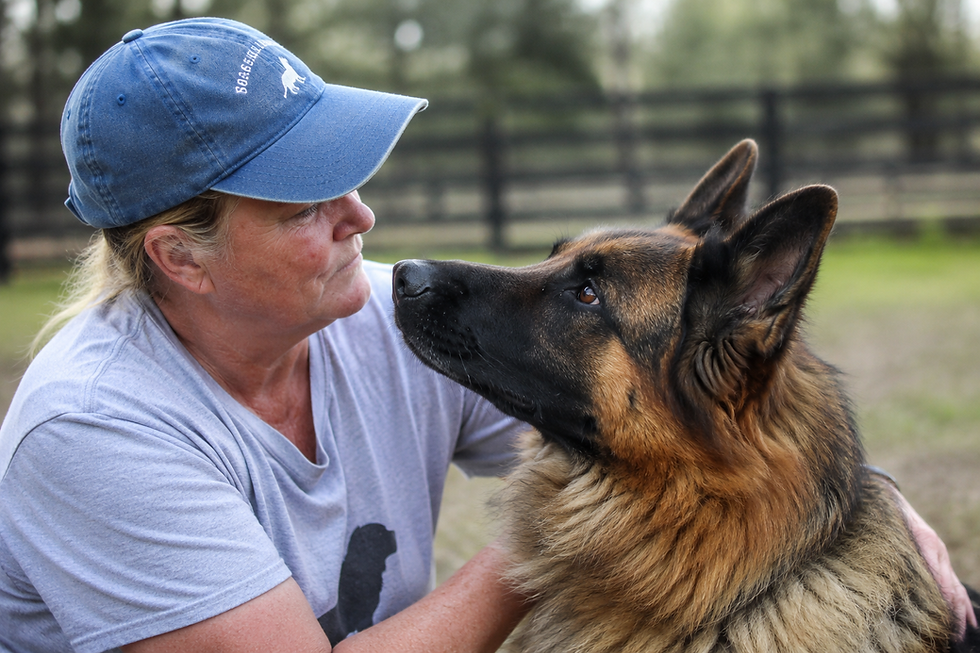
The contrast between the prison gates and the trust built through dog training in Puerto Rico really stayed with me. The women’s transformations feel especially powerful—I've been using https://makeugc.pro/makeugc-alternative