


Why Does My Dog Follow Me Everywhere? The Science Behind Canine Attachment, Trust, and Connection
Southernwind Educational Library™
Canine Behavior, Attachment, and Human–Dog Relationships
By Maria Cecilia Martinez Founder of Southernwind Kennels LLC
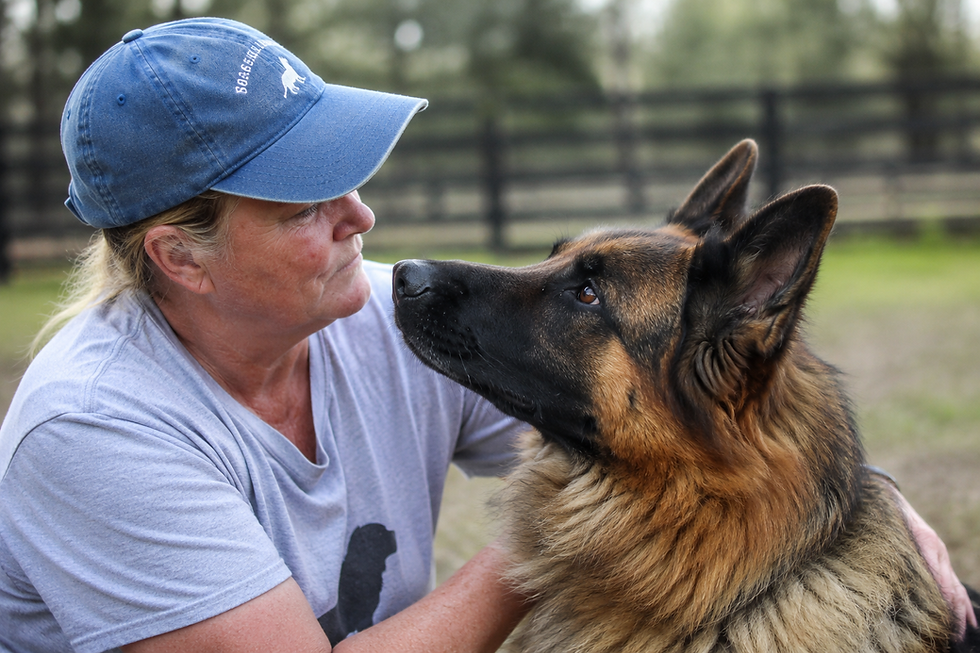
Every time I step outside at Southernwind, I am reminded that I rarely walk anywhere alone.
Before I have crossed the first part of the ranch, I may already have four or five dogs moving behind me.
Some walk beside me. One may trot ahead and look back to make sure I am still coming.
Others sit quietly near the gates or in front of another dog’s pen, watching me and waiting to see where I am going next.
Sometimes I laugh and ask them:
“Where do all of you think we are going?”
They do not know whether I am heading toward the puppy area, checking water buckets, opening a gate, inspecting a fence, or simply walking across the yard.
But they know something may happen when I move.
After more than five decades of living and working with dogs, I have learned that this simple behavior carries far more meaning than most people realize.
So, why does my dog follow me everywhere?
The easy answer is love.
Love and attachment may certainly be part of it—but that answer is incomplete.
A dog may follow because you provide emotional security. He may follow because your movement predicts food, freedom, play, work, attention, or access to something interesting.
A working dog may follow because generations of selection taught him to remain aware of human movement.
Another dog may follow because he is uncertain or anxious.
From a distance, all these dogs may appear to be doing the same thing.
They are not necessarily feeling the same thing.

Dogs Do Not Merely Live Beside Us—They Organize Their Attention Around Us
Domestic dogs have developed an extraordinary ability to build social relationships with human caregivers.
Research has found that dogs can display several of the same attachment characteristics used to describe the bond between a young child and a caregiver.
These include seeking proximity, becoming distressed during separation, using the caregiver as a source of reassurance, and behaving more confidently when the caregiver is present.
This does not mean that dogs believe we are literally their mothers or fathers.
It means that the human caregiver can occupy an important psychological position in the dog’s life: a familiar individual who provides safety, information, access to resources, and emotional stability.
That is much more meaningful than simply calling dogs “pack animals.”
Your Dog May Be Using You as a Secure Base
One of the most important concepts in canine attachment science is the secure-base effect.
A secure base is not someone the dog must cling to every second.
It is someone whose presence helps the dog explore, investigate, solve problems, and recover from uncertainty.
In a landmark study, dogs showed greater persistence in a problem-solving task when their owners were present and encouraging them. A stranger did not produce the same owner-specific effect.
The researchers concluded that owners can function as a secure base for their dogs beyond simple attachment tests and even during cognitive challenges.
That distinction matters.
A securely attached dog does not necessarily hide behind his owner. Quite often, the owner’s presence gives the dog enough confidence to move outward into the world.
This is something I have witnessed repeatedly with puppies and adult dogs.
A young dog may hesitate at a new surface, an unfamiliar sound, a moving object, or an open gate. But when a trusted person walks forward calmly, the dog often gathers himself and follows.
He is not merely obeying.
He is borrowing confidence from a relationship he understands.
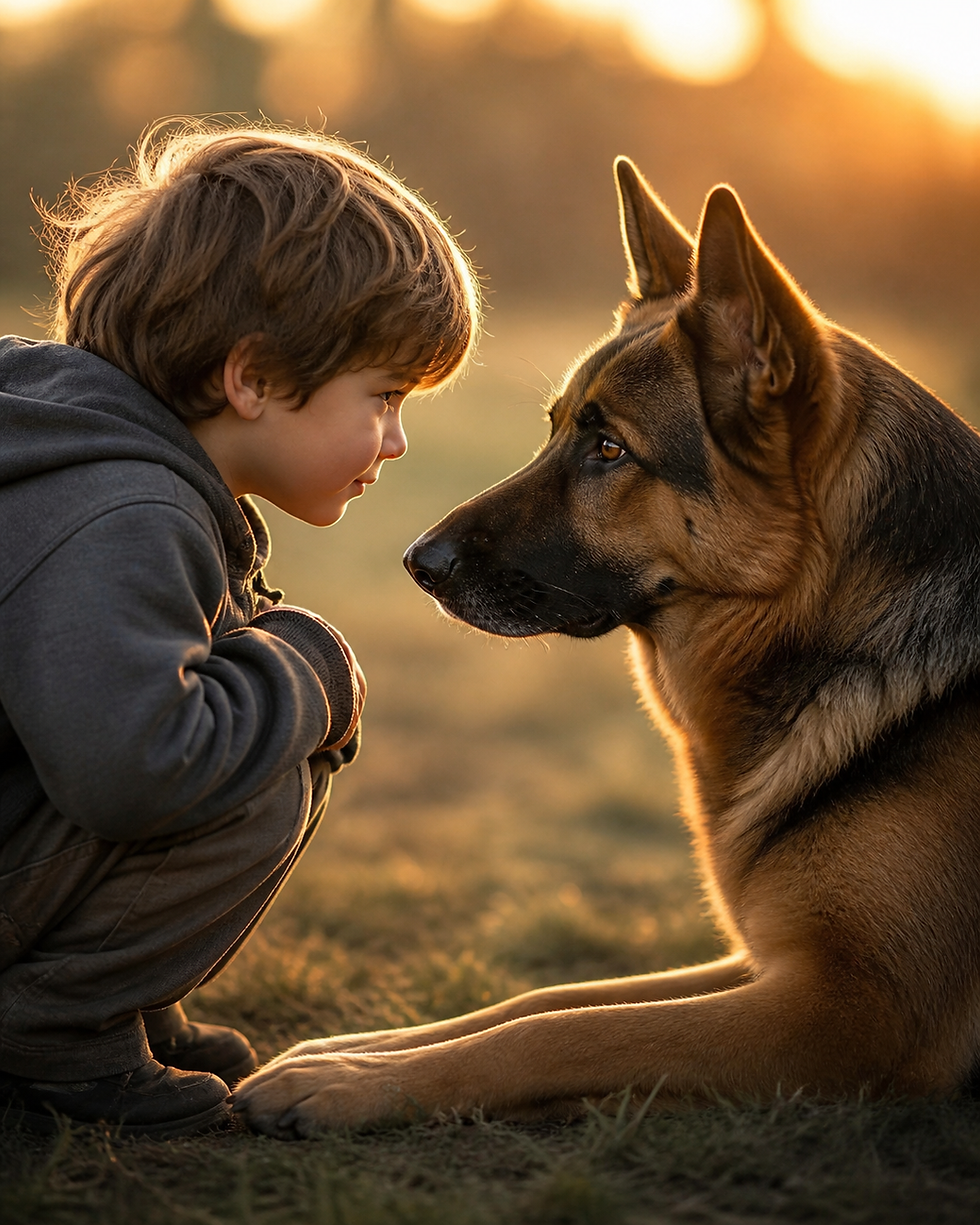
A dog who follows you is not always saying, “I cannot live without you.” Very often, he is saying, “You are where life happens.”

Dogs Read Our Movements as Information
People frequently assume that a dog follows because the dog is waiting for food.
Sometimes that is exactly what is happening.
But dogs also learn that human movement predicts change.
When you stand up from a chair, you may be going toward the door.
When you put on certain shoes, a walk may be coming. When you enter the kitchen, food may appear. When you walk toward the kennels, gates may open. When you pick up keys, everyone’s routine may change.
Through repetition, the dog learns the sequence.
Human movement becomes information.
Every time following you results in attention, affection, access, activity, or something interesting, the behavior may become stronger. The dog does not need to receive a treat every time.
The possibility that something worthwhile may occur can be enough to keep him watching.
This is why a sleeping dog can appear completely unconscious until his person quietly rises from the couch.
The eyes open.
The ears move.
And suddenly there is a dog standing directly behind you.
He was resting, but he was never completely disconnected from your rhythm.

Dogs Look to Us Before Deciding How to Respond
Dogs do not only follow our bodies. They also monitor our emotional reactions.
Research on social referencing has shown that dogs may look toward their owners when confronted with an unfamiliar or potentially concerning object and use the owner’s emotional response to help guide their own behavior.
Dogs exposed to positive or negative emotional messages from humans adjusted how they approached or avoided uncertain situations.
That means your dog may be watching:
How quickly you move
Whether your body becomes tense
Where your eyes are directed
Whether your voice changes
Whether you stop or continue forward
Whether you treat a situation as ordinary or dangerous
This is not supernatural energy detection.
It is sophisticated social observation.
Dogs have spent thousands of years becoming extraordinarily attentive to human behavior. They notice details that people often reveal without realizing it.
Some Dogs Were Bred to Remain Closely Connected to Human Movement
Breed history can influence how strongly a dog monitors and follows people.
Research comparing dogs selected for different functions has found differences in human-directed social behavior.
Herding and sporting breeds have demonstrated relatively high levels of human-directed play, while studies of gaze behavior have reported greater human orientation in breeds historically selected for cooperative work than in some more independently developed breed groups.
This does not mean every dog of a particular breed behaves identically.
Genetics establish tendencies—not guarantees.
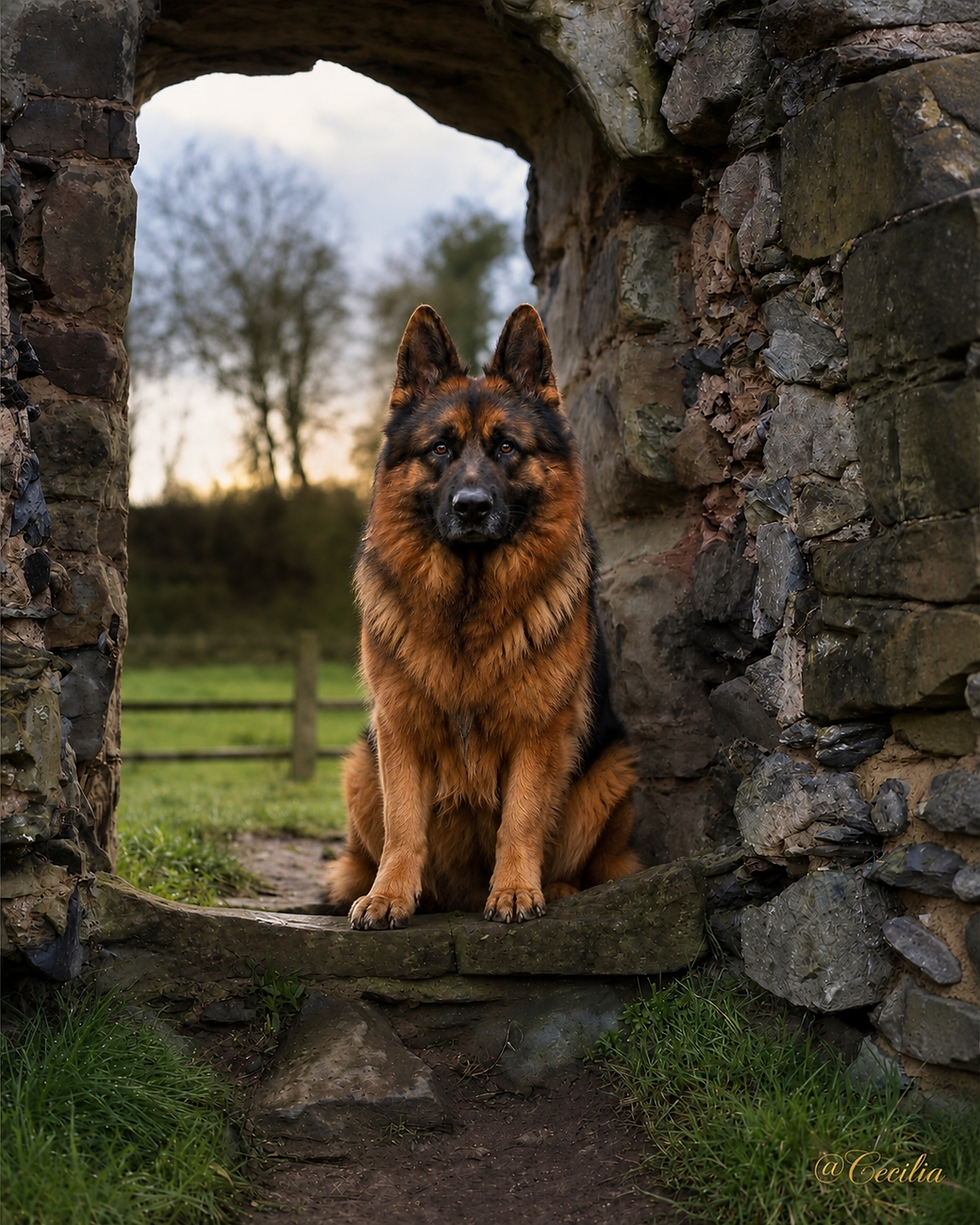
But a German Shepherd was not created to remain mentally disconnected from his handler. The breed’s historical work required awareness of movement, territory, livestock, environmental pressure, human direction, and changes occurring around the handler.
A well-bred German Shepherd often wants to know:
Where are you going? What are you doing? Is there something I should be watching? Do you need me involved?
That intense awareness can be beautiful when it is paired with stable nerves and the ability to settle.
It becomes unhealthy when the dog cannot function without constant access to one person.
The Oxytocin Connection—Real Science, but Not a Magical Explanation
Oxytocin is often called the “bonding hormone,” and it appears to participate in some human–dog interactions.
An influential study published in Science found an association between prolonged dog-to-owner gaze and changes in oxytocin in both dogs and owners.
The researchers described a possible positive feedback loop in which mutual gaze reinforced affiliative interaction between the two species.
That finding is important, but it should not be turned into another internet fairy tale.
Not every dog who stares at a person is experiencing a profound hormonal declaration of love.
Oxytocin responses can vary with sex, life experience, context, relationship history, and the individual dog.
Later research has emphasized that experience and social development may be as important as domestication alone in explaining these responses.
The bond is real.
But no single hormone explains the entire dog–human relationship.
The Southernwind Four-Part Reading of Following Behavior
When I evaluate a dog who follows a person constantly, I do not begin by calling the dog loyal, dominant, submissive, spoiled, or anxious.
I look at four different possibilities.
1. Connection
The dog follows with a loose body, relaxed expression, natural curiosity, and the ability to settle.
He enjoys proximity, but he does not fall apart when physical distance appears.
2. Expectation
The dog has learned that the person predicts something valuable.
That may include meals, opening doors, outdoor access, toys, affection, work, car rides, or interaction.
This does not make the relationship false. Learning and attachment frequently exist together.
3. Purpose
This is especially common in dogs bred for herding, guarding, retrieving, service, protection, or other forms of cooperative work.
The dog is not necessarily needy.
He may simply be highly engaged.
4. Distress
The dog follows because he is unable to regulate himself when separated from the person.
His body may appear tense. He may pace, pant, vocalize, refuse food, scratch at barriers, destroy exit areas, eliminate indoors, or react strongly when the person touches keys, shoes, or a door.
That is no longer simple companionship.
It may indicate separation-related distress requiring proper evaluation.
What I See When the Southernwind Dogs Wait for Me
When I watch the dogs gather as I move around the ranch, I do not believe every one of them is following for precisely the same reason.
-One may expect to be released into the field.
-Another may be waiting for a few minutes of individual attention.
-A young dog may follow because everything is still new and my movement gives him direction.
-An experienced adult may understand the ranch routine so well that he anticipates where I will go before I reach the gate.
-Another may simply want to be involved.
This is why a lifetime with dogs teaches you to look beyond the visible behavior.
Five dogs can stand behind the same person while carrying five different motivations inside them.
The behavior is only the surface.

Does Following Mean Your Dog Loves You?
It can be one expression of attachment, but following alone does not prove love, respect, obedience, or a perfect relationship.
That is the honest answer.
A dog may follow someone who controls food and access even when the emotional relationship is weak.
A fearful dog may follow because he lacks confidence.
An under-stimulated dog may follow because nothing else in his environment is interesting. A dog experiencing discomfort may suddenly seek more reassurance.
Conversely, a confident dog who rests peacefully in another room may still have a deep and secure attachment to his owner.
Closeness should not be measured only in feet.
A healthy relationship is measured by trust, communication, emotional stability, responsiveness, and the dog’s ability to function both with you and without touching you every moment.

A “Velcro Dog” Is Not Automatically a Dog With Separation Anxiety
The term Velcro dog is commonly used for a dog who prefers to remain close to one person.
That preference is not automatically a behavioral disorder.
The key difference is what happens when access to the person is removed.
A securely attached or naturally close dog may follow you through the house but still sleep, eat, play, or settle when you leave.
A dog experiencing separation anxiety may show genuine distress or panic during departure or absence.
Extreme owner-following has been associated with separation anxiety, but following behavior by itself is not enough to make a diagnosis.
Veterinary behavioral guidance identifies signs such as escalating anxiety around departure cues, persistent vocalization, destruction, indoor elimination, pacing, inability to settle, or attempts to escape.
Punishing these behaviors does not treat the underlying emotion.
A dog cannot be corrected out of panic.
When Following Behavior Deserves Closer Attention
Pay attention when the behavior:
Appears suddenly in a dog who was previously independent
Becomes frantic rather than calm
Prevents the dog from eating, resting, or exploring
Includes pacing, panting, trembling, whining, drooling, or escape attempts
Increases dramatically in an older dog
Occurs with changes in vision, hearing, sleep, appetite, house training, or orientation
Creates a safety hazard because the dog is constantly underfoot
A sudden behavioral change should not be dismissed as the dog becoming more loving.
Pain, illness, sensory decline, neurological changes, fear, or cognitive dysfunction can alter proximity-seeking behavior.
Veterinary evaluation should come before assumptions when the change is abrupt or severe.

How to Preserve the Bond Without Creating Dependency
The goal should not be to make a connected dog emotionally distant.
-The goal is to create secure attachment with functional independence.
A dog should learn that closeness is safe and separation is also safe.
Teach the dog to rest on a bed or mat while you move around the room.
Reward calmness when he chooses to settle away from your feet.
Provide appropriate physical exercise, scent work, chewing, problem-solving activities, and breed-relevant tasks.
Practice brief, uneventful separations before the dog becomes distressed.
Avoid transforming every departure into an emotional ceremony and every return into an explosion of excitement.
Most importantly, do not confuse dependence with devotion.
The strongest dog–human bond is not one in which the dog is incapable of existing without the person.
It is one in which the dog trusts that the relationship remains secure even when the person temporarily disappears.
What Following Us Really Means
When dogs follow us, they may be expressing attachment, anticipation, curiosity, cooperation, habit, emotional dependence, or several of these at the same time.
That is why the question is not only:
“Why does my dog follow me everywhere?”
The better questions are:
How does my dog follow me?
Is his body relaxed or distressed?
Can he settle when I stop moving?
Can he function confidently when I am not beside him?
Does my presence give him strength—or has my presence become something he cannot live without?
Those questions reveal far more than the number of footsteps behind us.
After all these years, I still smile when I turn around and see a line of dogs moving across the ranch with me.
But I do not take it as blind worship.
I see generations of canine history, individual experience, learned expectations, working purpose, and genuine social connection walking behind me.
And that is far more beautiful than simply saying:
“They follow me because they love me.”
Frequently Asked Questions
Why does my dog follow me everywhere?
Dogs may follow because of attachment, curiosity, learned expectations, breed tendencies, boredom, a desire for interaction, or anxiety. The dog’s body language and ability to remain calm when separated help reveal the underlying motivation.
Does my dog following me mean that he loves me?
Following can be one sign of attachment, but it is not proof by itself. Dogs also follow people who control access to food, doors, play, or outdoor activities. Look at the entire relationship rather than one behavior.
Why does my dog follow me but not other family members?
The dog may have developed a stronger attachment or learning history with the person who provides the most predictable guidance, interaction, exercise, security, training, or meaningful activity. It is not always simply the person who fills the food bowl.
Why does my dog follow me into the bathroom?
The bathroom is not psychologically special to most dogs. The dog follows because you moved, a door may close between you, and following you has become part of his normal routine.
Are German Shepherds naturally Velcro dogs?
Many German Shepherds are highly attentive to their handlers because the breed was developed for cooperative work requiring awareness of human direction and environmental change. However, genetics, early development, training, temperament, and individual experience all influence the final behavior.
How can I tell the difference between attachment and separation anxiety?
A securely attached dog may prefer to remain close but can still settle, eat, sleep, or play when alone. A dog with separation anxiety shows distress or panic associated with the person’s departure or absence.
Should I stop my dog from following me?
Not necessarily. Calm following is often normal. Intervention becomes important when the dog cannot settle independently, shows distress, creates a physical hazard, or experiences a sudden change in behavior.
How can I teach my dog to be more independent?
Reinforce calm resting at a comfortable distance, provide meaningful independent activities, teach a reliable mat behavior, and practice brief separations that remain below the dog’s panic threshold. Severe separation distress should be addressed with a veterinarian or qualified veterinary behavior professional.
A Southernwind Closing Message
After more than fifty years of living and working with dogs, I have learned that we should never measure a relationship by how desperately a dog clings to us.
I do not want a dog to follow me because he is frightened, insecure, or unable to function without me. I want him to follow because he trusts where I am leading him. Because he has learned that my presence brings guidance, consistency, purpose, and safety.
Build the kind of relationship in which your dog chooses your company, watches your movements, understands your routines, and trusts your decisions—but can also rest peacefully when you are not standing beside him.
That does not weaken the bond between you.
It proves that the bond has given him confidence.
That is not distance. That is security.
Continue following the Southernwind Educational Library™ for honest, experience-based canine education grounded in real dogs, real life, and established behavioral science.
About the Author
Maria Cecilia Martinez is the founder of Southernwind Kennels LLC, established in 1974. She has devoted more than five decades to German Shepherd breeding, canine development, training, temperament evaluation, and owner education.
Her experience includes approximately 22 years working with the Puerto Rico Mounted Police, decades of work with dogs and horses, service as an AKC and FCI dog judge and FCI temperament judge, and the development of early puppy stimulation, environmental exposure, and breeder-education programs.
Her work combines lifelong practical observation with modern canine behavioral and veterinary science, while preserving the temperament, structural soundness, working purpose, and human connection that define the German Shepherd Dog.
Scientific References
Horn, L., Huber, L., and Range, F. The Importance of the Secure Base Effect for Domestic Dogs. PLOS ONE, 2013.
Karl, S., et al. Exploring the Dog–Human Relationship by Combining fMRI, Eye-Tracking and Behavioural Measures. Scientific Reports, 2020.
Merola, I., Prato-Previde, E., and Marshall-Pescini, S. Dogs’ Social Referencing Towards Owners and Strangers. Animal Cognition, 2012.
Nagasawa, M., et al. Oxytocin-Gaze Positive Loop and the Coevolution of Human–Dog Bonds. Science, 2015.
Kolm, N., et al. The Link Between Selection for Function and Human-Directed Play Behaviour in Dogs. Biology Letters, 2020.
Flannigan, G., and Dodman, N. Risk Factors and Behaviors Associated With Separation Anxiety in Dogs. Journal of the American Veterinary Medical Association, 2001.
Sundman, A.-S., et al. Long-Term Stress Levels Are Synchronized in Dogs and Their Owners. Scientific Reports, 2019.
Merck Veterinary Manual. Behavior Problems of Dogs: Separation-Related Distress and Anxiety.
Comments