


Puppy Transition to a New Home: The Critical Role of the Breeder in Separation, Development, and Long-Term Behavior

The First Major Transition in a Puppy’s Life
Why the Puppy Transition to a New Home Is Difficult: Understanding Separation from the Litter
The puppy transition to a new home is not a simple emotional moment — it is a critical neurological and behavioral event that can shape the dog’s future stability, adaptability, and relationship with humans.
Many people assume the difference lies only in the puppy’s personality or the new family environment. In reality, the success of that transition is often determined long before the puppy ever leaves the breeder.
During the first eight weeks of life, a puppy’s brain, emotional responses, and social bonds are rapidly developing. This period is one of the most critical stages in canine behavioral development.
For a puppy, life in the litter is a highly structured social system. Puppies sleep together, eat together, compete for space and milk, wrestle constantly, and communicate through body language and scent. Their world revolves around the warmth of their littermates and the guidance of their mother.
When the puppy leaves that environment, it experiences its first true social separation.
Understanding what happens during this moment—and how breeders prepare puppies for it—is essential for creating dogs that adapt confidently to their new homes.
The Psychology of Separation in Young Puppies
Dogs are social mammals, and their early emotional development is strongly influenced by social bonds.
Within the litter, puppies rely on constant physical contact and shared scent for comfort and security.
The mother provides both nourishment and behavioral regulation, while littermates create the puppy’s first experience with social communication.
When a puppy is removed from that environment, the brain must quickly redirect its attachment system toward new caregivers.
Behaviorally, this transition may appear as:
• whining or vocalizing
• restlessness during the first nights
• searching behavior
• seeking warmth and proximity
These responses are normal developmental behaviors, not signs of weakness or poor temperament.
In fact, they reflect the puppy’s natural instinct to remain connected to its social group.
When breeders have properly prepared the puppy during the early weeks, the attachment system quickly redirects from littermates to humans, allowing the puppy to adapt to its new family.

Why the Breeder’s Role Is So Important
The breeder plays a far greater role in a puppy’s future behavior than many people realize.
A responsible breeder does not simply produce puppies. A responsible breeder develops puppies.
During the first eight weeks of life, puppies are forming:
• neurological pathways
• stress-recovery mechanisms
• social communication skills
• curiosity toward novelty
• trust toward humans
The environment created by the breeder strongly influences how easily a puppy will adapt to the complexity of human life.
Early experiences such as early neurological stimulation (ENS), structured environmental exposure, and controlled social interaction are not extras — they are what determine whether a puppy adapts with confidence or struggles with stress in a new home.
This is the difference between a puppy that reacts to change and one that understands it.
Puppies that are raised with thoughtful exposure to people, environments, and mild challenges tend to develop stronger emotional resilience and adaptability.
When that preparation is missing, the transition to a new home can become significantly more stressful.
A puppy does not become confident in its new home — it arrives that way, or it struggles.

Experience Matters: The Breeder’s Perspective
After more than five decades breeding and developing working and companion dogs, one lesson becomes very clear.
The puppies that adapt best to their new homes are not necessarily the calmest puppies or the most dominant puppies.
They are the puppies that have been prepared for life beyond the litter.
Responsible breeders spend the first eight weeks doing far more than feeding and cleaning puppies.
They are gradually introducing the puppy to the human world through structured experiences that build:
• confidence
• curiosity
• emotional stability
• human bonding
When these foundations are built properly, the moment of separation becomes a natural developmental step rather than a traumatic break.

Building Confidence Before Puppies Leave the Litter
One of the most effective ways breeders prepare puppies for their future homes is through controlled environmental exposure.
Puppies that experience mild novelty during early development learn that new things are not dangerous—they are simply part of life.
These exposures may include:
• different surfaces and textures
• various sounds and movements
• supervised outdoor exploration
• gentle handling by humans
• brief individual experiences away from the litter
These experiences strengthen the puppy’s problem-solving ability and stress tolerance.
When puppies arrive in their new homes with this foundation, they are far more capable of adapting to unfamiliar environments.

The Importance of Early Human Interaction
Another critical step in preparing puppies for separation is developing a strong positive association with humans.
If puppies spend their early weeks interacting only with littermates and their mother, they may become overly dependent on the litter group.
Experienced breeders gradually introduce puppies to individual human interaction, allowing them to learn that people provide safety, guidance, and positive experiences.
This helps redirect the puppy’s social attachment system toward humans before the puppy ever leaves the breeder.
As a result, the puppy enters its new home already predisposed to:
• follow humans
• seek human guidance
• bond quickly with new caregivers

Genetics Still Matters
While early development plays a powerful role in shaping behavior, genetics remains the foundation of temperament.
The stability of a dog’s nervous system, its curiosity, and its ability to recover from stress are strongly influenced by inherited traits.
Balanced temperament does not happen by accident. It is the result of thoughtful breeding selection over generations.
A puppy with strong genetic temperament will generally recover more quickly from stress and adapt more easily to environmental changes.
However, even excellent genetics can be weakened by poor early development, while thoughtful early experiences can significantly strengthen a puppy’s natural resilience.
The best outcomes occur when good genetics and good early development work together.
Scientific Research on Early Puppy Development
Modern canine behavioral research has long confirmed the importance of early development in shaping adult behavior.
Several foundational studies have helped establish our understanding of this critical period.
Research by Scott and Fuller (1965) demonstrated how genetics and environment interact to influence canine behavioral development.
Later work by Freedman, King, and Elliot (1961) identified a critical socialization period between approximately 3 and 12 weeks of age, during which puppies are particularly receptive to forming social attachments and learning about their environment.
Further behavioral research summarized by Serpell and Jagoe (1995) emphasized how early social exposure significantly influences a dog’s adaptability, emotional stability, and relationship with humans.
These findings confirm what experienced breeders have observed for decades:
The experiences puppies receive during their first weeks of life have long-lasting effects on their ability to cope with stress, form relationships, and navigate the world around them.
The First Nights in a New Home
When puppies arrive in their new homes, they are suddenly surrounded by unfamiliar smells, sounds, and routines.
They no longer have the warmth of littermates sleeping beside them.
For this reason, the first days should focus on stability and reassurance rather than stimulation.
Helpful practices include:
• maintaining consistent feeding routines
• providing a safe sleeping area
• allowing calm bonding with the family
• avoiding overwhelming environments or excessive visitors
Most well-prepared puppies begin to adapt within a few days as their new family becomes their new social group.
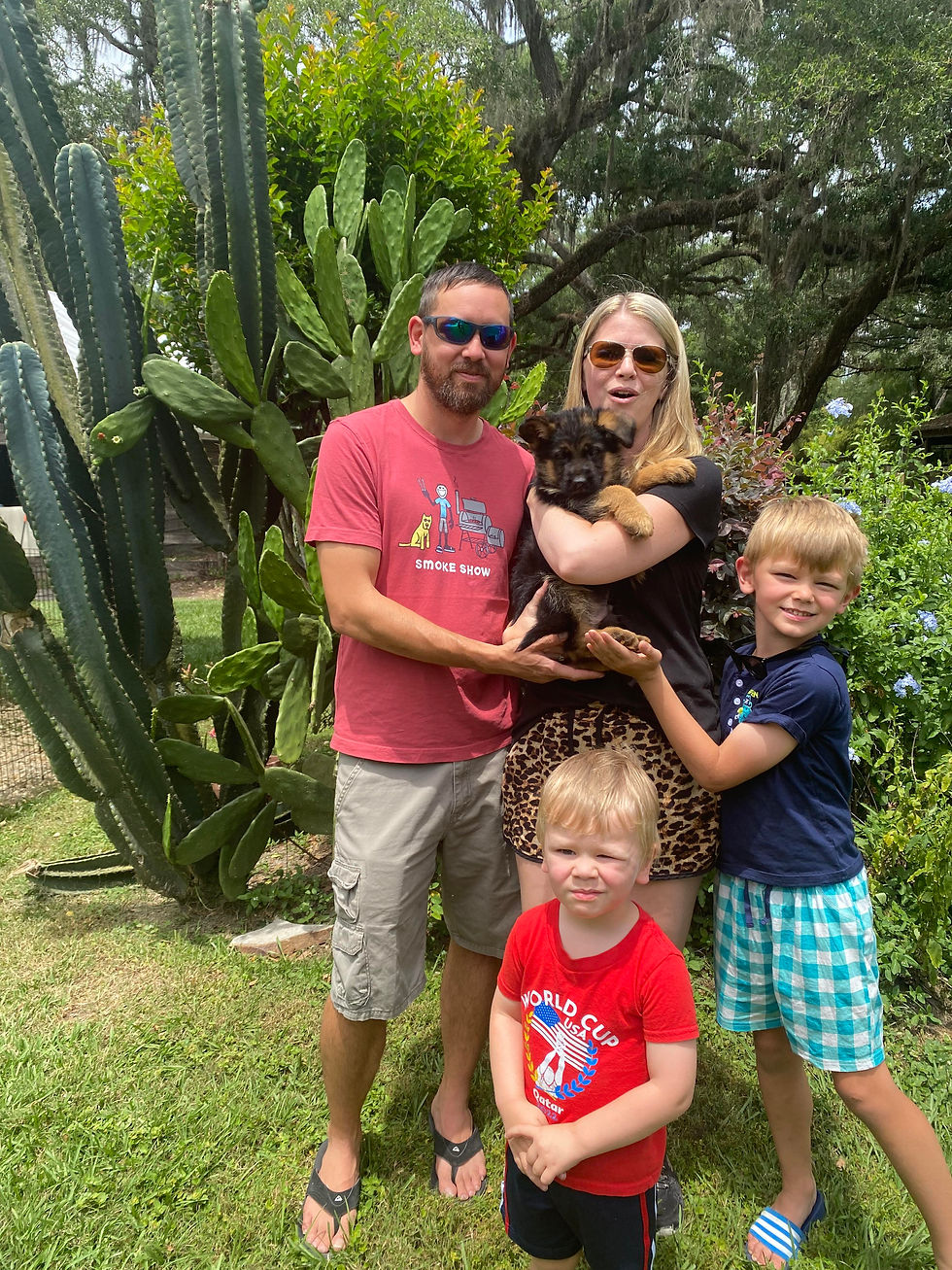
The Invisible Work Behind a Confident Puppy
When people see a puppy confidently exploring its new home, they are witnessing only the final moment of a much longer developmental process.
What they do not see are the weeks of preparation that occurred before the puppy ever left the breeder.
The handling.
The exposure.
The gradual building of trust.
The careful development of confidence.
Behind every well-adjusted puppy stepping into a new home lies something that is rarely visible:
The difference between a stressed puppy and a confident dog is not luck — it is preparation.

Frequently Asked Questions About Puppy Transition to a New Home
How do puppies feel when they leave their litter?
Puppies experience a sudden loss of constant contact, warmth, and familiarity when they leave their litter. This can create stress or confusion, especially if they have not been properly prepared by the breeder through early socialization and gradual independence training.
At what age should puppies go to their new home?
Puppies should typically go to their new homes at around 8 weeks of age. At this stage, they have developed basic social skills from their litter and are ready to begin bonding with humans, provided they have received proper early development.
Why is the breeder so important in the transition process?
The breeder plays a critical role in preparing puppies psychologically. Early exposure to humans, environments, and structured experiences determines how well a puppy adapts to a new home and handles separation.
Do puppies miss their mother and littermates?
Yes, puppies initially experience the absence of their mother and littermates. However, with proper preparation and early bonding with humans, they quickly transfer their attachment to their new family.
How can you make a puppy’s first night easier?
Providing a consistent routine, a warm sleeping area, and familiarity (such as a blanket with scent from the breeder) can significantly reduce stress. Puppies that have been properly prepared adapt much faster.
About the Author
Cecilia Martinez is a professional German Shepherd breeder with over 50 years of experience in canine development, training, and behavioral evaluation.
She has worked with mounted police units, trained working and sport dogs, and served as an AKC and FCI Temperament Judge.
Through Southernwind Kennels, she has developed a structured early puppy development system focused on building stable, confident, and adaptable dogs prepared for real-world environments.
Her work integrates genetics, early neurological stimulation, environmental exposure, and human bonding to produce dogs capable of thriving in both family and working roles.


Comments